
Table of Contents
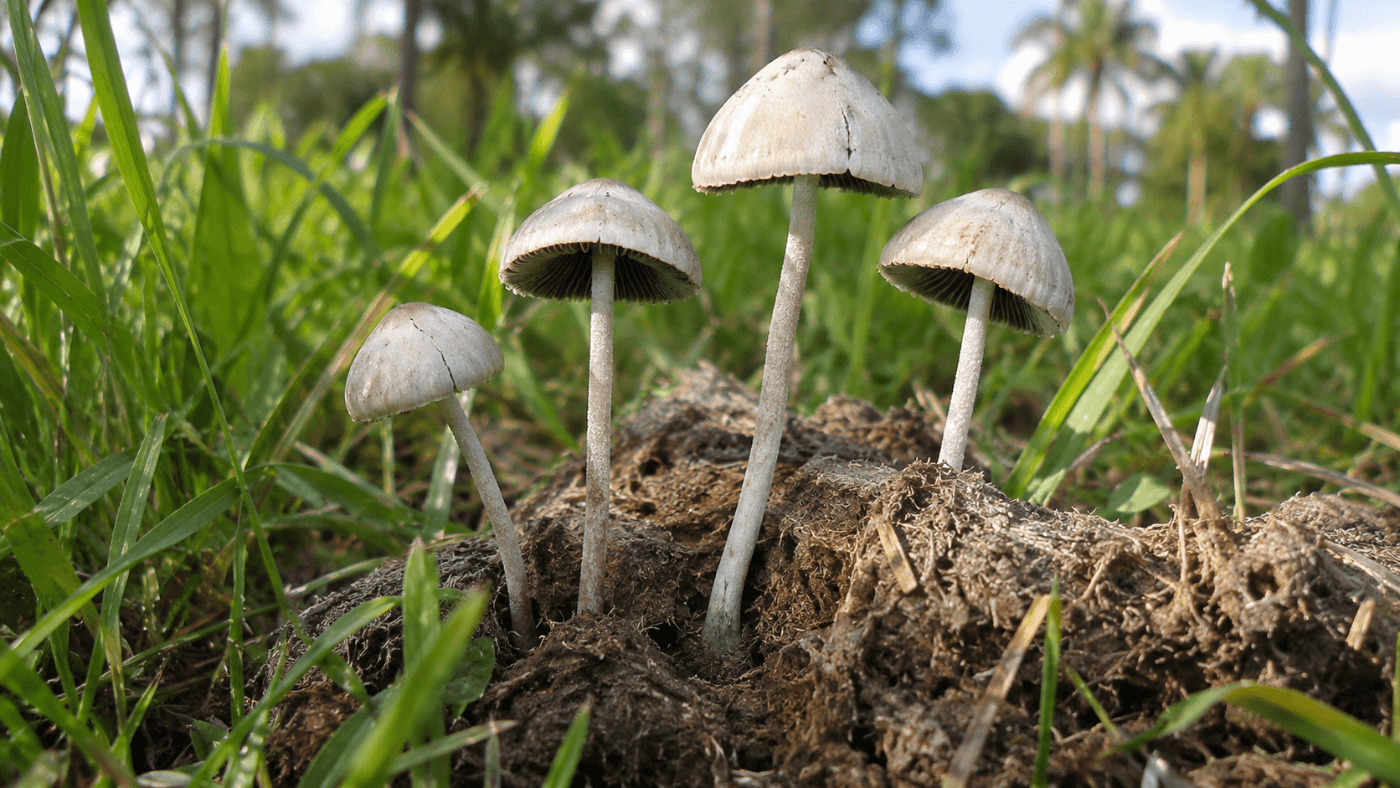
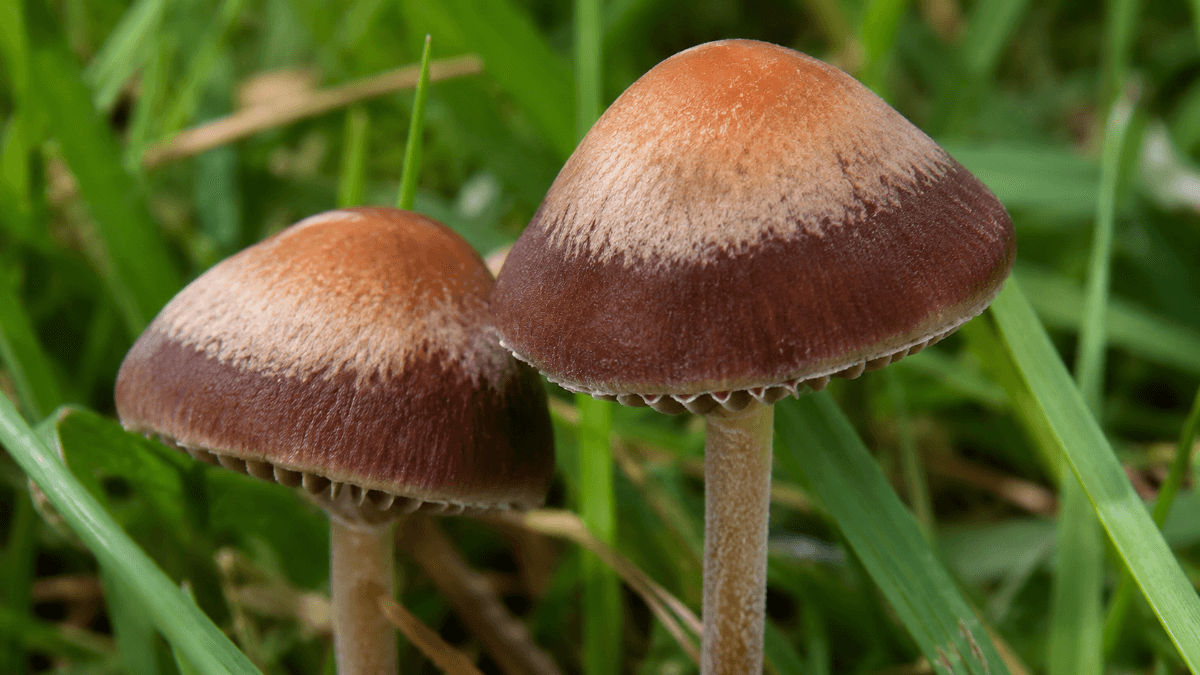
Panaeolus cinctulus (Bolton) Saccardo, the banded mottlegill, is a small, cosmopolitan dark-spored agaric in the family Bolbitiaceae, long filed under the synonym Panaeolus subbalteatus. Its smooth, lemon-shaped spores measure about 11–14 × 7.5–9.5 µm and drop a black print. A dark band on a drying, hygrophanous cap is its field signature.
- Current name: Panaeolus cinctulus (Bolton) Sacc. 1887. Older literature uses P. subbalteatus, which is now a synonym.
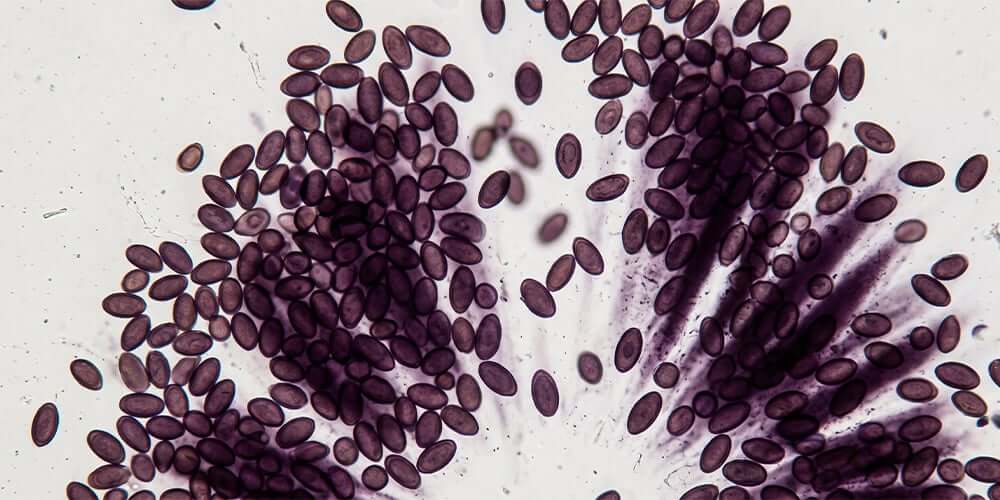
- Spores are smooth, thick-walled and elliptical to rhomboid in face view, about 11–14 × 7.5–9.5 µm, with a black spore print.
- The common lawn look-alike, Panaeolina foenisecii, has roughened spores and a deep brown print, so a slide settles most ID questions.
- Magic Spore Labs supplies Panaeolus cinctulus spore prints for microscopy and taxonomy study only. We do not ship to California, Georgia, Idaho or Florida.
Taxonomy
What Is Panaeolus cinctulus?
Panaeolus cinctulus is a small gilled mushroom in the genus Panaeolus (order Agaricales). James Bolton described it back in 1791 as Agaricus cinctulus, and Pier Andrea Saccardo moved it into Panaeolus in 1887. That name has stuck ever since.
The epithet cinctulus roughly means "girdled." It points to the dark ring of color that hangs on near the cap edge while the rest of the cap dries out. You will also see it called the banded mottlegill, the belted panaeolus, or just "subbs," which is a holdover from its old name.
It turns up almost everywhere. There are records from every inhabited continent, and in the U.S. it has been logged in all 50 states. Look for it on rich ground like compost piles, manured garden beds and heavily fertilized lawns, usually spring through fall after a good rain.
Classification
Basidiomycota › Agaricomycetes › Agaricales › Bolbitiaceae › Panaeolus.
Authority
(Bolton) Saccardo, 1887. Basionym: Agaricus cinctulus Bolton, 1791.
Common Names
Banded mottlegill, belted panaeolus, weed Panaeolus, "subbs."
Habitat Notes
Solitary to clustered on compost, manured soil and fertilized turf; rarely on dung.
Why So Many Synonyms?
Before modern revisions, small brown Panaeolus collections were split into many names based on minor color and size differences. Gerhardt's 1996 taxonomic revision of Panaeolus and Panaeolina lumped many of them together. The synonym list for P. cinctulus now includes P. subbalteatus, P. alveolatus, P. rufus, P. variabilis and P. dunensis.
Labeling tip: If a vial, print or older reference says "subbalteatus," record it as Panaeolus cinctulus and keep the original label in your notes. That keeps your records searchable against current databases such as GBIF and iNaturalist.
Morphology
How to Identify Panaeolus cinctulus
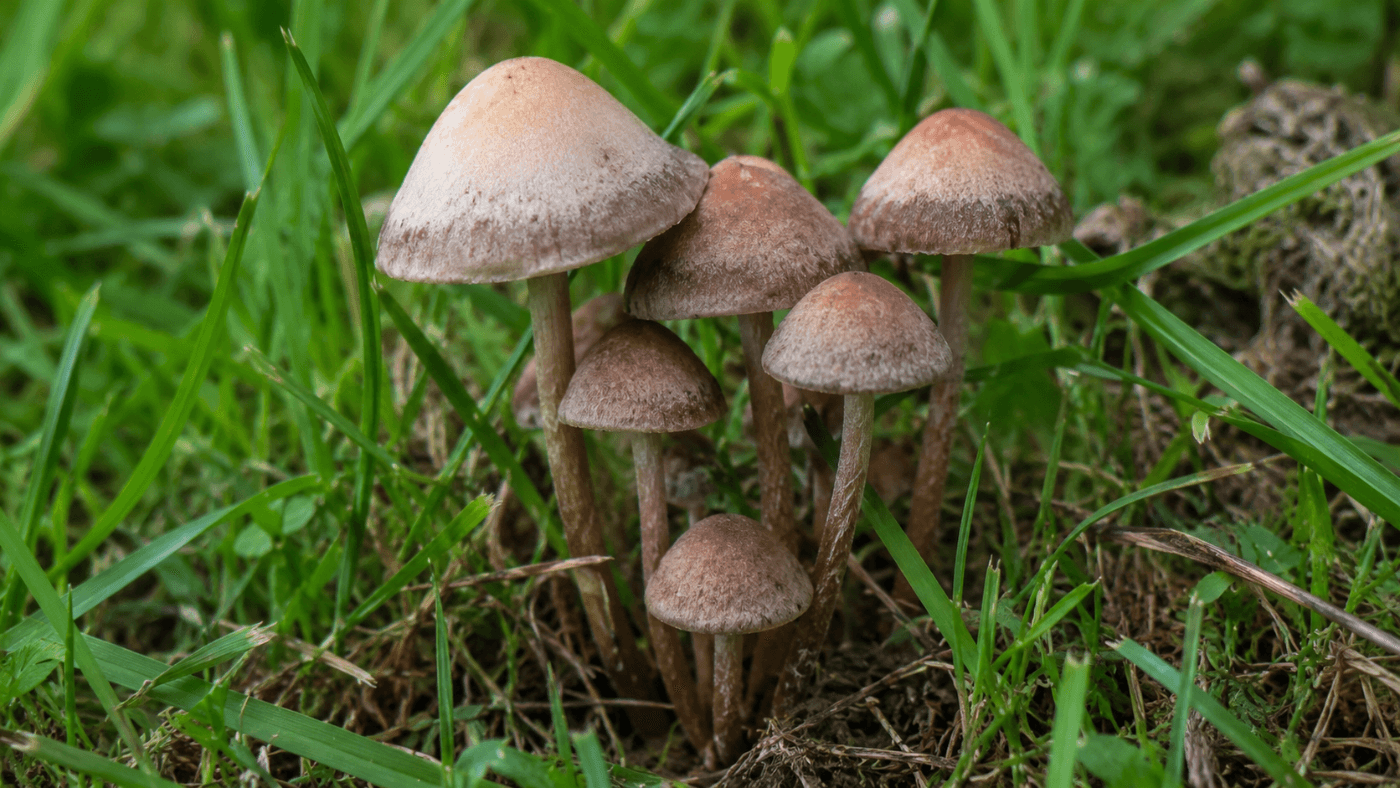
Banded mottlegill identification starts with the cap. The cap is 1.5–6 cm wide, bell-shaped to convex when young, and broadly umbonate or flat with age. It is hygrophanous: cinnamon to reddish brown when moist, nearly black when wet, and paler as it dries.
Drying starts at the center. A darker ring often stays at the margin, and that band is the trait the species is named for. The gills are close and attached, cream at first, then mottled grey to sooty black as spores ripen, with white, finely fringed edges.
The stem is 4–10 cm long, thin, hollow, reddish brown and dusted with fine white fibrils. There is no ring. The base can show a blue stain, which taxonomists treat as a chemically reactive morphological trait.
Field Traits Worth Writing Down
If you only jot down a few things about a banded mottlegill collection, make it these:
- Cap color when moist and again once it starts drying out, plus whether the dark marginal band shows up
- Gill color and whether it looks mottled (patchy grey and black) rather than evenly dark
- White, slightly fringed gill edges, which are easiest to see with a hand lens
- No ring or veil remnants on the stem
- Substrate: compost, manured bed or lawn, and the date it was found
Microscopy
Panaeolus cinctulus Spores Under the Microscope
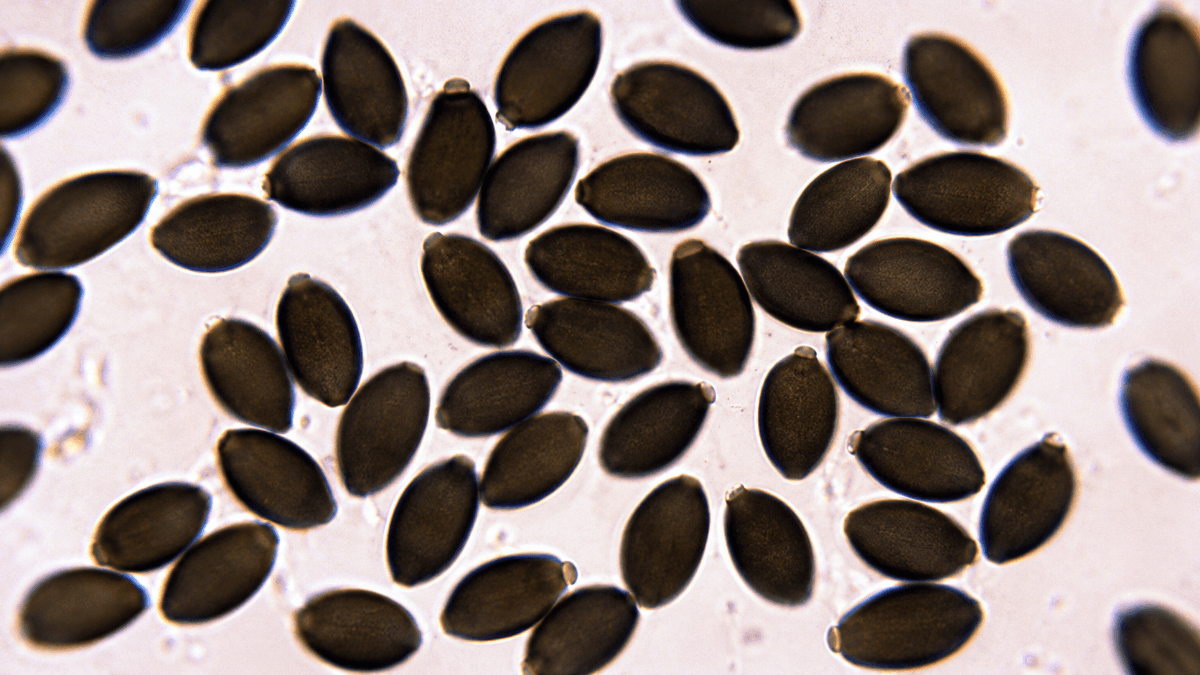
Under the microscope, Panaeolus cinctulus spores are smooth and thick-walled. They look elliptical to slightly rhomboid (lemon-shaped) in face view and elliptical in side view, with an apical germ pore typical of the genus. Published measurements run about 11–14 × 7.5–9.5 µm.
A spore print from a mature cap is black. That single trait separates it from the brown-spored lawn species it grows beside. For measuring, use a calibrated ocular micrometer at 400× or 1000× oil immersion and record at least 30 spores per collection. Our microscope guide for viewing mushroom spores covers the optics.
Spore Length Ranges Compared (µm)
Published ranges for three dark-spored species often compared on the slide. Scale: 8–18 µm.
Length alone overlaps, so pair it with surface texture and print color. If you are new to comparing spores across species, read our guide to species ID through spore characteristics first.
Comparison
Panaeolus cinctulus vs Panaeolina foenisecii
The most common confusion is with Panaeolina foenisecii, the haymaker's or lawn mower's mushroom. Both fruit in lawns, both have hygrophanous brown caps, and both are small. The slide and the print separate them quickly.
| Trait | Panaeolus cinctulus | Panaeolina foenisecii | Psilocybe cubensis |
|---|---|---|---|
| Spore print | Black | Deep brown, sometimes purplish | Dark purple-black |
| Spore size | 11–14 × 7.5–9.5 µm | 12–17 × 7–11 µm | 11.5–17.3 × 8–11.5 µm |
| Spore surface | Smooth, thick-walled | Roughened (warted), dextrinoid | Smooth, sub-ellipsoid |
| Cap | Dark marginal band as it dries | Two-toned drying, no distinct band | Golden brown, often with a darker center |
| Ring | None | None | Membranous ring present |
| Typical substrate | Compost, manured soil, rich turf | Lawns | Herbivore dung in pasture |
Panaeolus fimicola is another close look-alike. Per published descriptions, it carries sulphidia on the gill faces, which P. cinctulus lacks. For a deeper look at a cubensis profile on the same measurement standard, see What Is Psilocybe cubensis?
If you want a second Panaeolus on the same slide session, Bunnell Pans spore prints make a handy comparison. Running two species side by side, with the same mount and the same magnification, makes the differences in spore shape much easier to see than reading numbers off a chart.
Panaeolus Cinctulus Mushroom Spore Prints
$24.99
$37.48
Panaeolus Cinctulus Spore Print The Panaeolus cinctulus Mushroom Spore Print from Magic Spore Labs offers researchers a genuinely distinct specimen — a departure from the Psilocybe cubensis strains that make up the majority of the spore print catalog, and an… read more

Lab Workflow
How to Document a Panaeolus cinctulus Spore Print
A clean record makes your measurements usable later. This is a documentation protocol for microscopy only.
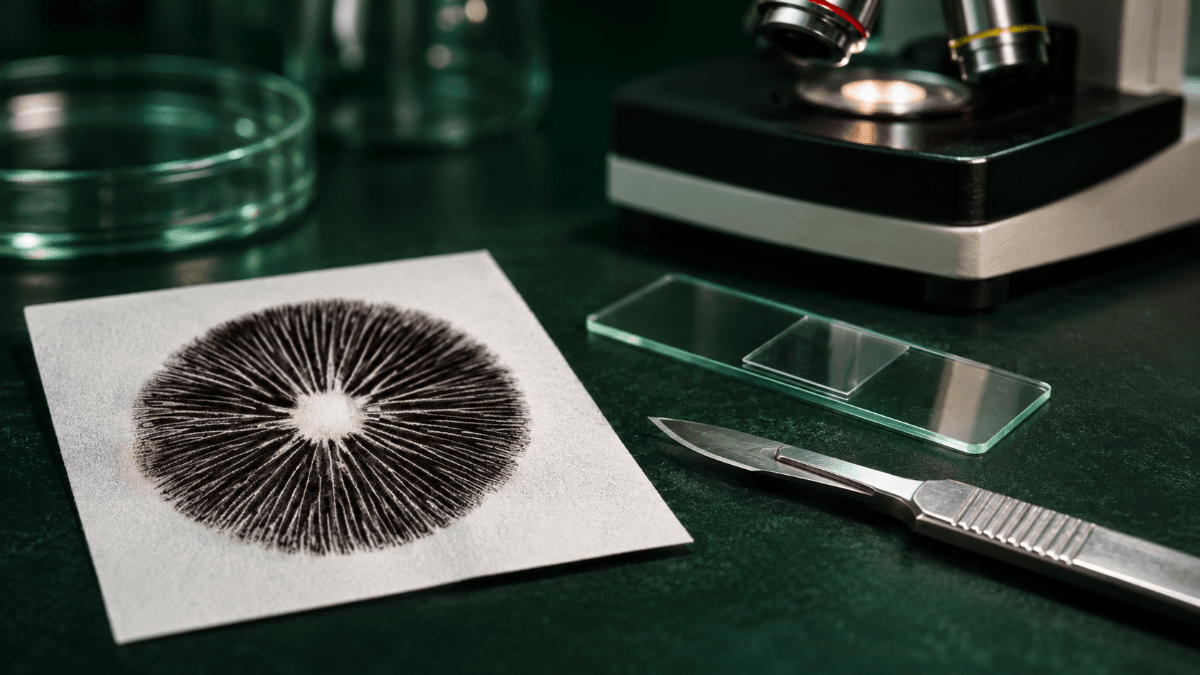
- Log the lot. Record the print lot number, date received and the label exactly as written, including any old synonym such as subbalteatus.
- Note print color under daylight. Black is expected. A brown cast is a flag to check for Panaeolina before you go further.
- Prepare a wet mount. Transfer a small amount of spore mass to a slide with water or 3% KOH and a coverslip.
- Measure 30 or more spores. Use a calibrated micrometer at 1000× oil immersion. Record length, width and Q (length ÷ width).
- Describe the surface and shape. Note smooth versus roughened walls, face and side views, and the germ pore.
- Photograph and file. Save images with a scale bar and enter the record in your microscopy notebook template.
Storage: Keep prints sealed, dry and cool between sessions. Our guide on how long spore prints last covers storage conditions in detail.
Compliance
Is It Legal to Buy Panaeolus cinctulus Spore Prints?
It depends on your state. Ungerminated spores are sold in most U.S. states for microscopy and taxonomy research. Magic Spore Labs does not ship spore products to California, Georgia, Idaho or Florida. Check your local rules before ordering; our state-by-state spore legality guide is a good starting point.
Our prints are prepared in our cleanroom and sold strictly for microscopy, identification and taxonomy study.
Start Your Panaeolus cinctulus Slide Study
Sealed prints, clear labeling and lot tracking. Mix and match species with the Pick 5 Spore Prints Bundle.
Shop Cinctulus Prints Build a Pick 5 BundleKeep reading: more guides from our microscopy library.
Sources
- Panaeolus cinctulus, Wikipedia (taxonomy, synonyms, morphology, spore measurements).
- Panaeolina foenisecii, Wikipedia (spore size, ornamentation, print color).
- Psilocybe cubensis, Wikipedia (spore size and shape).
- Banded Mottlegill (Panaeolus cinctulus), iNaturalist (observations and distribution).
- Panaeolus cinctulus (Bolton) Sacc., GBIF (nomenclature and occurrence records).
- Gerhardt, E. (1996). Taxonomic revision of the genera Panaeolus and Panaeolina. Bibliotheca Botanica 147.
- Arora, D. (1986). Mushrooms Demystified, 2nd ed. Ten Speed Press, pp. 358–359.
Magic Spore Labs sells spores and spore prints for microscopy, identification and taxonomy research only. Nothing on this page is guidance on cultivation or consumption. We do not ship to California, Georgia, Idaho or Florida.
FAQs
Is Panaeolus subbalteatus the same as Panaeolus cinctulus?
Yes. Panaeolus subbalteatus is an older name that is now treated as a synonym of Panaeolus cinctulus (Bolton) Sacc. If a label or older book says subbalteatus, file it under P. cinctulus and keep the original name in your notes.
What color is a Panaeolus cinctulus spore print?
Black. A mature Panaeolus cinctulus cap drops a black spore print, which is one of the fastest ways to separate it from brown-spored lawn mushrooms like Panaeolina foenisecii.
How big are Panaeolus cinctulus spores?
About 11 to 14 by 7.5 to 9.5 micrometers. They are smooth and thick-walled, lemon-shaped to slightly rhomboid in face view, elliptical in side view, and carry an apical germ pore. Measure at least 30 spores at 1000x oil immersion for a usable average.
How do you tell Panaeolus cinctulus apart from Panaeolina foenisecii?
Check the print and the spore surface. Panaeolus cinctulus has a black print and smooth spores. Panaeolina foenisecii, the haymaker's mushroom, has a deep brown print and roughened, warted spores that run a bit longer at 12 to 17 micrometers.
Where does Panaeolus cinctulus grow?
On rich, disturbed ground. It is recorded on compost piles, manured garden soil and heavily fertilized lawns, and only rarely on dung. The species is cosmopolitan and has been documented in all 50 U.S. states, usually from spring through fall after rain.
Does Magic Spore Labs ship Panaeolus cinctulus spore prints to every state?
No. We do not ship spore products to California, Idaho, Florida or Georgia. Everywhere else, our Panaeolus cinctulus prints are sold strictly for microscopy, identification and taxonomy research.