
Table of Contents
- Why a Microscopy Notebook Matters in Spore Research
- Core Elements of an Effective Notebook
- Metadata and Repeatable Observation
- Sample Documentation and Identification
- Microscope Configuration and Optical Settings
- Measurement Standards and Calibration
- Separating Observation From Interpretation
- Visual Records: Photos and Sketches
- Reporting Templates for Consistency
- Organization and Long-Term Use
- Common Documentation Mistakes
- FAQs
A well-built microscopy notebook for spore research is not just a place to jot down what you saw under the microscope. It is a structured system for capturing context, preserving accuracy, and allowing meaningful comparisons over time. In spore-focused microscopy, even small changes in preparation, lighting, or timing can alter what appears in the field of view. Without written records, those variables disappear, leaving you to rely on memory rather than evidence.
Many researchers and hobbyists start microscopy with enthusiasm for optics and imaging but delay building a documentation habit. That delay often leads to frustration later, especially when trying to reproduce an observation or compare older work to new samples. A notebook bridges that gap. It turns individual sessions into a connected body of work rather than isolated moments of observation.
This guide focuses on how to build a practical notebook system that grows with your experience. It explains how to document metadata, how to record measurements with confidence, and how to use reporting templates that reduce effort while improving consistency. Whether you are examining Spore Prints collected on different days or analyzing Mushroom Liquid Spores prepared using different methods, a clear notebook helps ensure that what you record remains useful long after the session ends.
Why a Microscopy Notebook Matters in Spore Research
Microscopy depends on controlled observation. Two samples may appear similar until subtle differences emerge under closer inspection. Those differences might not come from the specimen itself, but from how it was prepared, how long it sat before viewing, or how the microscope was configured. A notebook preserves those conditions so that observations can be understood in context.
In spore research, this context is critical. Morphology, size range, and distribution patterns are often central points of comparison. Without written documentation, it becomes difficult to determine whether observed variation is meaningful or simply the result of inconsistent setup. A notebook provides the continuity needed to evaluate those differences honestly.
Over time, a microscopy notebook becomes more than a record. It becomes a reference library. Patterns emerge, measurement ranges stabilize, and earlier assumptions can be revisited with clearer perspective. This long-term value is what makes documentation worth the effort from the very first session.
Core Elements of an Effective Notebook
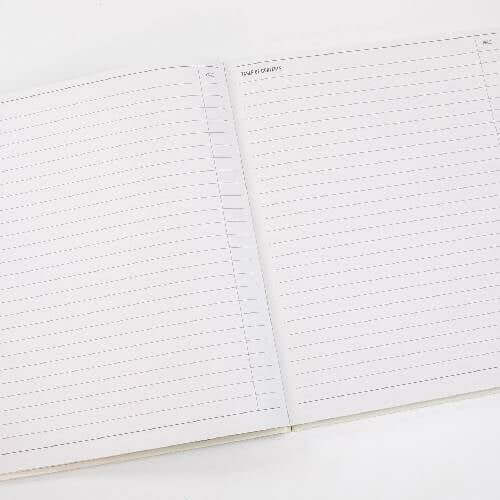
An effective notebook does not require complexity or specialized tools. What it requires is consistency. The most useful notebooks follow a predictable structure so that every entry captures the same types of information in the same order.
At a minimum, each entry should include identification details, sample information, microscope configuration, observational notes, and any measurements taken. When these elements are repeated session after session, missing information becomes obvious, and habits form naturally.
The goal is not to write as much as possible, but to write what matters every time. Over-documentation can be just as problematic as under-documentation if it leads to burnout or inconsistency. A simple, repeatable framework is the foundation of long-term success.
Metadata and Repeatable Observation
Metadata refers to the contextual details surrounding an observation. In microscopy, metadata often determines whether an observation can be repeated or verified later. Recording the date, time, and purpose of a session may seem routine, but these details quickly become important when reviewing older entries.
Timing alone can influence what you see. The difference between viewing a wet mount immediately versus twenty minutes later may affect distribution, clarity, or artifact formation. By recording preparation time and viewing time, your notebook preserves that context.
Other metadata worth recording includes environmental conditions, unusual handling steps, or deviations from normal procedure. These notes help explain why a particular session may look different from others, even when working with the same sample source.
Sample Documentation and Identification
Clear sample identification is essential when working with multiple specimens. Confusion between samples undermines documentation faster than almost any other mistake. A consistent naming system prevents overlap and ensures that entries remain traceable.
Each sample should have a unique identifier that is used consistently across notebook entries, image files, and measurement tables. This identifier does not need to be complicated. It only needs to be unique and repeatable.
Sample documentation should also include format and preparation details. Whether you are working with Spore Prints or Mushroom Liquid Spores, noting how the sample was prepared provides crucial context for interpreting what you observe under the microscope.
Including preparation date, observation date, and any storage notes further strengthens the record. Over time, these details allow you to compare not just specimens, but handling methods as well.
Golden Teacher Mushroom Spore Syringe
$24.99
Golden Teacher Liquid Spores Widely regarded as one of the most popular strains for microscopy research and a top choice among mycology enthusiasts for its distinctive morphology, the Golden Teacher Mushroom Spores strain is a longstanding favorite. It is among… read more

Microscope Configuration and Optical Settings
Microscope settings directly shape what you see. Two identical samples can look very different depending on objective choice, illumination intensity, condenser position, and diaphragm adjustment. Recording these settings transforms subjective impressions into documented conditions.
At minimum, record the objective used and total magnification. Additional notes on illumination method and condenser position help explain differences in contrast and edge definition. If a camera is used, recording exposure or gain settings prevents confusion when reviewing images later.
These notes do not need to be long. A short checklist-style format is often sufficient. The key is that the same information is captured every time, making comparisons meaningful.
Measurement Standards and Calibration
Measurements are central to spore research, but only when calibration is current and documented. A number without scale context is meaningless in the long term. Your notebook should clearly state how measurements were obtained and when calibration was last verified.
Recording calibration method, applicable objectives, and measurement units ensures that size ranges can be trusted. If calibration changes, older measurements can still be interpreted accurately because their context is preserved.
When measuring Mushroom Liquid Spores, note whether spores were isolated or clustered. Clustering can distort apparent boundaries and influence measurements. Recording these details improves transparency and reliability.
Including sample size for measurements adds further clarity. A size range based on three spores carries different weight than one based on thirty. Your notebook should make that distinction obvious.
Separating Observation From Interpretation
One of the most valuable habits in microscopy documentation is separating observation from interpretation. Observations describe what is visible. Interpretations suggest what those observations might mean. Mixing the two creates bias that can persist for months.
Observational notes should focus on shape, size, edge clarity, transparency, and distribution. Use descriptive language rather than conclusions. Avoid labeling observations as significant or insignificant in the raw notes.
Interpretive thoughts can be recorded separately in a summary or notes section. This approach allows you to revisit raw data later without preconceived conclusions influencing your review.
Visual Records: Photos and Sketches
Visual documentation strengthens written notes by capturing spatial relationships and fine detail. Photographs preserve exact views, while sketches capture emphasis and distribution that may not photograph clearly.
Every visual should be labeled with sample ID, magnification, and context. Without labels, images lose value quickly, especially when revisited long after they were captured.
For Spore Prints, macro-level observations such as density and distribution can be recorded alongside microscopic visuals. These notes create a fuller picture of the sample and improve later comparison.
Reporting Templates for Consistency
Templates reduce effort while improving quality. By using the same structure for every entry, you eliminate guesswork and ensure that critical details are not forgotten.
ENTRY #: ________   DATE: ________   TIME: ________
SAMPLE ID:
FORMAT:
PREP METHOD:
MICROSCOPE / OBJECTIVE:
MAGNIFICATION:
CALIBRATION STATUS:
OBSERVATIONS:
MEASUREMENTS:
IMAGES / SKETCHES:
SUMMARY / NEXT STEPS:
Templates should evolve with your workflow, but changes should be intentional. Frequent format changes undermine consistency. Once a template works, stick with it.
Organization and Long-Term Use
As entries accumulate, organization becomes essential. Indexing by sample ID or maintaining summary pages helps transform individual entries into a usable archive.
Organization does not need to be elaborate. Even simple entry numbering and consistent labeling make long-term review far easier. The goal is to find past observations quickly and understand them without confusion.
Common Documentation Mistakes
- Inconsistent terminology between entries
- Missing calibration information
- Unlabeled or poorly labeled images
- Mixing observation with interpretation
- Relying on memory instead of written notes
Most of these mistakes stem from inconsistency rather than lack of knowledge. Templates and repetition solve the majority of documentation problems.
FAQs
What is the minimum information needed in a microscopy notebook?
At minimum, record date, sample ID, preparation method, objective used, magnification, and clear observational notes. These elements create a usable baseline for repeatability.
How detailed should entries be for spore work?
Entries should be detailed enough that you could recreate the observation without guessing. If you can repeat the setup and understand the observation later, the detail level is sufficient.
Should documentation differ between Spore Prints and liquid samples?
The structure remains the same, but liquid samples benefit from extra notes on dilution, mixing, and timing before observation.