

Table of Contents
- What Are Trinity Mushroom Spore Prints?
- The Genetics Behind Trinity Mushrooms
- Appearance of Trinity Mushrooms
- Key Features of Trinity Mushrooms
- Trinity Spore Print Characteristics
- Why Researchers Collect Spore Prints
- How Spore Prints Are Collected
- Proper Storage for Spore Prints
- Why Trinity Is a Unique Hybrid
- Conclusion
- FAQs
Trinity mushroom spore prints have become increasingly popular among mycology enthusiasts and microscopy researchers who study Psilocybe cubensis varieties. This unique hybrid strain stands out because of its unusual genetic lineage and distinctive spore characteristics. Collectors and researchers often seek out trinity mushroom spore prints to observe the microscopic structures that define this powerful hybrid.
The Trinity strain is known for combining genetics from three well-known cubensis varieties: Penis Envy, Tidal Wave, and Aztec God. The result is a hybrid that expresses a wide range of visual traits and microscopic features. Because of this complex lineage, Trinity spore prints are fascinating specimens for microscopy work and strain comparison studies.
What Are Trinity Mushroom Spore Prints?
Trinity mushroom spore prints are the preserved spores collected from mature Trinity mushrooms, typically deposited onto foil, paper, or glass surfaces. When a mushroom cap releases spores, they fall in patterns that create a visible print. These prints contain millions of microscopic spores that researchers can study under magnification.
Spore prints play an important role in mycology because they help identify mushroom species and strains. In the case of trinity mushroom spore prints, the spores reveal the classic characteristics of Psilocybe cubensis while sometimes displaying subtle variations influenced by the hybrid’s parent strains.
Under a microscope, these spores typically appear smooth, thick-walled, and sub-ellipsoid in shape. Their coloration usually ranges from deep purple to dark purple-brown, which is consistent with other cubensis varieties. These microscopic details make spore prints an essential tool for taxonomic observation and strain comparison.
Trinity Mushroom Spore Prints
$24.99
$37.48
Trinity Spore Print The Trinity Spore Print offers enthusiasts and researchers the opportunity to explore one of the most intriguing strains in the fungal world. Known for its balanced lineage and captivating characteristics, the Trinity strain has earned respect for… read more

The Genetics Behind Trinity Mushrooms
One of the most fascinating aspects of Trinity mushrooms is their complex genetic background. The strain was deliberately created by combining three powerful Psilocybe cubensis varieties, each contributing unique characteristics.
The name “Trinity” reflects this three-way lineage, which blends traits from Penis Envy, Tidal Wave, and Aztec God. Breeders designed this hybrid to combine potency, visual uniqueness, and vigorous growth characteristics.
Penis Envy Influence
Penis Envy is widely known within mycology communities for its unusual morphology and high potency. Many hybrids derived from this strain inherit thick stems, reduced spore production, and strong bruising reactions. Trinity often reflects these features, which can influence the density of its spore prints.
Tidal Wave Influence
Tidal Wave is another hybrid cubensis variety known for its strong fruiting performance and distinctive appearance. This parent strain contributes robust growth traits and consistent morphology. Researchers studying trinity mushroom spore prints often notice stable spore shapes typical of Tidal Wave genetics.
Aztec God Influence
Aztec God brings classic cubensis structure and genetic stability to the Trinity lineage. This strain helps reinforce traditional mushroom characteristics such as cap shape and spore color, helping maintain the recognizable purple-brown prints associated with Psilocybe cubensis.
Appearance of Trinity Mushrooms
Although the focus of microscopy work is on spores, the physical appearance of Trinity mushrooms also attracts attention from collectors and strain researchers. Trinity often produces large, sturdy fruiting bodies with thick stems and broad caps.
Many Trinity specimens display pale coloration, which is likely influenced by the genetics of Penis Envy and albino-leaning phenotypes. Caps may appear cream-colored, off-white, or light golden depending on the isolation and growing conditions.
Some isolates even develop near-albino appearances, which can make the mushrooms visually distinct from typical golden cap cubensis strains. Because Trinity is a hybrid, slight variations in appearance are common between different genetic lines.
Key Features of Trinity Mushrooms
Trinity mushrooms have several defining characteristics that distinguish them from other cubensis strains. These traits often appear consistently across multiple isolates and are part of what makes the strain notable in the mycology community.
- Large, Thick Stems: One of the most recognizable physical traits of Trinity mushrooms is their thick, sturdy stems. This structure likely comes from the influence of the Penis Envy lineage, which is known for producing dense fruiting bodies.
- Light-Colored Caps: Many Trinity mushrooms develop pale caps that range from white to cream tones. In some cases, caps may also display a faint golden tint depending on the phenotype.
- Intense Blue Bruising: When handled or cut, Trinity mushrooms often show strong blue or blue-green bruising reactions. While bruising itself is not unique to this strain, the intensity of the coloration is commonly observed in hybrids derived from strong cubensis genetics.
- Vigorous Growth Patterns: Researchers often note that Trinity exhibits rapid colonization and robust growth characteristics. The hybrid genetics can contribute to strong flush cycles and vigorous development in controlled environments.
Trinity Spore Print Characteristics
The most important aspect for microscopy collectors is the appearance and structure of trinity mushroom spore prints. Like other cubensis strains, these prints reveal key taxonomic features under magnification.
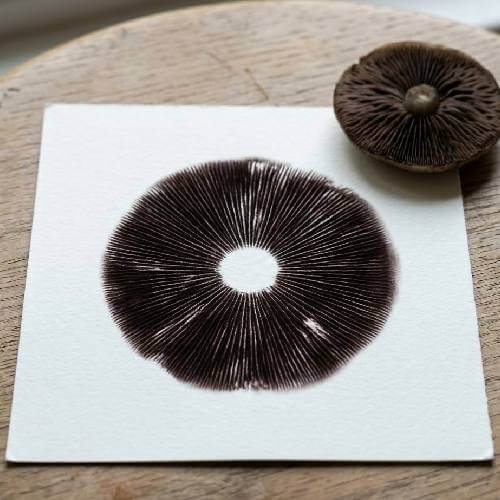
- Spore Color: Trinity spore prints typically display a deep purple-brown coloration. This pigment is characteristic of Psilocybe cubensis and helps confirm species identification when examining mushroom specimens.
- Spore Shape: Under a microscope, Trinity spores generally appear sub-ellipsoid or oval. They often have smooth outer walls and a clearly visible germ pore, which is a small opening involved in the germination process.
- Print Density: The density of trinity mushroom spore prints can vary slightly depending on the phenotype. Some hybrids with strong Penis Envy influence may produce lighter prints due to reduced sporulation. However, many Trinity specimens still yield dense collections of spores suitable for microscopy observation.
Why Researchers Collect Spore Prints
Spore prints are an essential tool in mycological research. They allow scientists and hobbyists to examine microscopic structures that define mushroom species and strains.
For microscopy enthusiasts, trinity mushroom spore prints offer a chance to observe unique hybrid genetics in action. The spores can be studied for shape, size, pigmentation, and other identifying features. Comparing Trinity prints with other cubensis varieties can also help researchers better understand strain variation and lineage relationships.
Because the Trinity strain is a hybrid, its spores may show subtle characteristics inherited from multiple parent strains. This makes them particularly interesting for comparative microscopy studies.
How Spore Prints Are Collected
Spore prints are typically collected from mature mushroom caps. The cap is placed gill-side down onto a clean surface such as aluminum foil or paper. After several hours, the spores fall naturally and create a visible pattern beneath the cap.
Once the print forms, it can be carefully folded and sealed for storage. Foil is often used because it protects spores from moisture and contamination while making long-term storage easier.
Proper collection techniques help preserve the integrity of spore prints so they remain suitable for microscopy analysis.
Proper Storage for Spore Prints
To preserve their quality, spore prints should be stored in a cool, dark, and dry environment. Moisture, heat, and light can degrade spores over time and reduce their viability for research.
Many collectors store prints inside sealed plastic bags or protective envelopes along with silica packets to control humidity. When stored correctly, spore prints can remain stable for years.
For microscopy researchers, proper storage ensures that trinity mushroom spore prints remain useful for observation and documentation long after they are collected.
Why Trinity Is a Unique Hybrid
Trinity stands out among Psilocybe cubensis hybrids because of its three-strain genetic lineage. Many mushroom hybrids combine two parent strains, but Trinity merges traits from three powerful varieties.
This unusual breeding approach produces a strain with diverse physical expressions and interesting microscopic features. Researchers studying spore prints often find Trinity particularly fascinating because the hybrid lineage may influence spore characteristics and morphology.
The combination of Penis Envy, Tidal Wave, and Aztec God genetics has helped establish Trinity as one of the more talked-about hybrid cubensis strains in modern mycology communities.
Conclusion
Trinity mushroom spore prints provide an excellent opportunity for microscopy researchers and mycology enthusiasts to study a unique hybrid strain of Psilocybe cubensis. With genetics derived from Penis Envy, Tidal Wave, and Aztec God, Trinity represents a fascinating combination of traits from three powerful lineages.
The spores typically display classic cubensis characteristics such as deep purple-brown coloration and sub-ellipsoid shapes, while the hybrid background may introduce subtle variations. These features make trinity mushroom spore prints valuable specimens for research, comparison, and documentation.
Whether you're exploring cubensis genetics or simply building a microscopy collection, Trinity stands out as an intriguing strain with a rich background and distinctive spore profile.
Disclaimer: This information is provided strictly for educational and mycological research purposes. The cultivation of Psilocybe mushrooms may be illegal in many regions. Always follow local laws and regulations.
FAQs
What are trinity mushroom spore prints used for?
Trinity mushroom spore prints are commonly used for microscopy research and taxonomic study. Researchers examine the spores under magnification to analyze their shape, size, and pigmentation.
What color are Trinity spore prints?
Like most Psilocybe cubensis varieties, Trinity typically produces spore prints that range from dark purple-brown to deep purple in color.
Are Trinity spores different from other cubensis strains?
Trinity spores share the typical characteristics of Psilocybe cubensis, but the hybrid genetics may introduce slight variations in density and sporulation patterns.
Why might Trinity spore prints sometimes appear lighter?
Some Trinity phenotypes inherit reduced spore production from the Penis Envy lineage. This can occasionally result in lighter spore prints compared to other cubensis strains.
How long can spore prints be stored?
When stored properly in a cool, dark, and dry environment, spore prints can remain stable for many years while retaining their usefulness for microscopy research.