

Table of Contents
- Understanding Leucism in Mushrooms
- Origins of the Treasure Coast Lineage
- How the Leucistic Variant Developed
- Key Traits of Leucistic Treasure Coast
- Why the Spore Prints Are Unique
- Microscopy Characteristics of Cubensis Spores
- How Climate Influenced the Strain
- Comparing Leucistic Treasure Coast to Standard Treasure Coast
- Why Collectors Value Unique Spore Prints
- Documenting Spore Print Variations
- The Role of Spore Prints in Mycological Study
- What Sets Leucistic Treasure Coast Apart
- Final Thoughts
- FAQs
Within the world of mycological microscopy and fungal taxonomy, certain cubensis varieties stand out because of their unusual characteristics. One such example is Leucistic Treasure Coast Spore Prints. This distinctive variant combines the coastal Florida lineage of the classic Treasure Coast strain with a visually striking leucistic mutation that alters the pigmentation of the fruiting body and its spores.
Collectors and microscopy researchers often gravitate toward unique spore varieties that display unusual features under magnification. In the case of leucistic treasure coast mushroom spore prints, the pale coloration and genetic lineage make them particularly interesting specimens for observation and documentation.
Understanding Leucism in Mushrooms
Before exploring the lineage itself, it helps to understand the concept of leucism. Leucism is a genetic mutation that reduces pigmentation in an organism while still allowing certain colors to remain present. Unlike albinism, which eliminates pigment completely, leucistic organisms often display faint coloration or subtle tones.
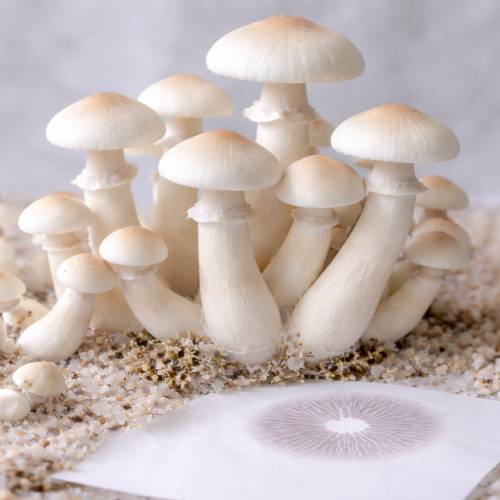
In mushrooms, leucism typically results in fruit bodies that appear pale white, cream, or light beige rather than the typical caramel or brown shades associated with most cubensis varieties. The gills and caps may also appear lighter, creating an almost “ghost-like” appearance in mature specimens.
Because spores develop within these structures, pigmentation changes can also influence the appearance of the resulting spore prints. This is why leucistic variants often produce prints that are noticeably lighter than those produced by standard strains.
Origins of the Treasure Coast Lineage
The lineage behind Leucistic Treasure Coast Spore Prints begins in the coastal regions of Florida in the United States. The Treasure Coast area, which includes counties such as Martin, St. Lucie, and Indian River, provides an environment well suited for naturally occurring cubensis populations.
Warm temperatures, high humidity, and frequent rainfall create ideal conditions for fungal growth. These environmental factors contributed to the discovery and documentation of the original Treasure Coast variety, which became known for its resilience and adaptability.
Over time, enthusiasts and researchers began isolating different phenotypes from this lineage. Through selection and stabilization, certain genetic traits became more pronounced. One such mutation produced a pigment-reduced variant that would later be recognized as the leucistic form of Treasure Coast.
How the Leucistic Variant Developed
The leucistic form of Treasure Coast did not arise from hybridization but rather from a naturally occurring mutation within the original genetic lineage. This mutation affects pigment production in the fruiting body while leaving most other characteristics unchanged.
Because the mutation is relatively stable when isolated and maintained properly, the leucistic phenotype can consistently produce pale caps and gills across successive generations.
For microscopy researchers, this mutation offers an interesting opportunity to study how visual phenotypes relate to underlying genetics. The lighter coloration also changes the appearance of the resulting spore prints, giving them a distinctly pale or translucent tone compared to the darker purple-brown prints typical of cubensis varieties.
Leucistic Treasure Coast Mushroom Spore Prints
$24.99
$37.48
Leucistic Treasure Coast Spore Print The Leucistic Treasure Coast strain is a captivating variation of the well-known Treasure Coast lineage, admired for its distinctive pale appearance and reliable growth traits. Recognized for its leucistic expression, this strain develops lighter, almost… read more

Key Traits of Leucistic Treasure Coast
Several defining characteristics make this strain particularly recognizable among cubensis varieties.
Pale Spore Print Color
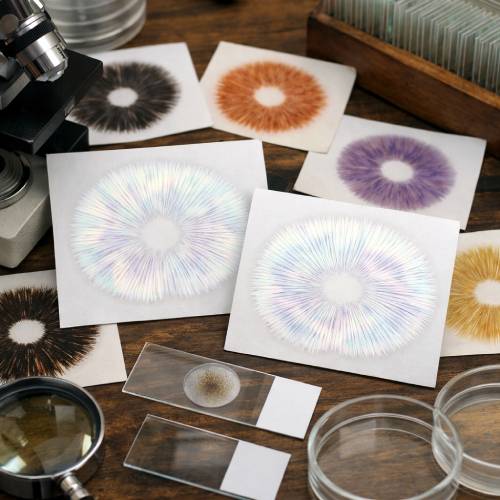
One of the most notable features of Leucistic Treasure Coast Spore Prints is their unusually light appearance. While traditional cubensis prints typically appear dark purple or brown, leucistic variants can produce prints that range from cream-colored to almost translucent.
Under microscopy, these lighter spores can still display the typical cubensis spore shape and size, but their subtle coloration makes them stand out in comparison to darker strains.
Distinctive Fruiting Body Appearance
The fruit bodies associated with this lineage are equally distinctive. Caps often appear pale white or light beige with a slightly darker center as they mature. The gills may also display reduced pigmentation, contributing to the overall ghost-like appearance.
This unique aesthetic is one of the reasons the strain attracts attention within microscopy collections.
Robust Colonization Traits
Like its parent strain, the leucistic variant retains strong colonization characteristics. The Treasure Coast lineage is widely known for vigorous mycelial growth and resilience in humid environments.
These traits are believed to originate from the subtropical coastal climate where the strain was first documented.
High Potency Reputation
Among cubensis varieties, this lineage has developed a reputation for relatively high potency. While potency can vary widely depending on genetics and environmental factors, many researchers note that the Treasure Coast lineage often falls above average when compared to standard cubensis varieties.
Why the Spore Prints Are Unique
The defining feature that makes leucistic treasure coast mushroom spore prints particularly interesting is the color variation. Most cubensis spores produce dark purple-brown prints due to pigment compounds within the spores themselves.
In the leucistic variant, pigmentation is partially reduced. As a result, the prints can appear significantly lighter, sometimes resembling a pale cream or faintly translucent pattern.
For microscopy enthusiasts, this creates an easy visual distinction when comparing slides from different cubensis strains.
Microscopy Characteristics of Cubensis Spores
When viewed under a microscope, cubensis spores share several consistent structural characteristics regardless of strain.
- Ellipsoid to slightly oval spore shape
- Smooth outer spore walls
- A visible germ pore at one end of the spore
- Dimensions typically ranging between 11–17 micrometers in length
- Pigmentation varying from purple-brown to lighter tones in leucistic variants
Studying these characteristics helps researchers identify and document species while comparing variations between different strains.
How Climate Influenced the Strain
The original Treasure Coast lineage developed in a humid subtropical climate where temperatures remain warm for most of the year. Such environments support rapid fungal growth and promote strong colonization abilities.
Because of this origin, the genetics behind the strain are often associated with adaptability and resilience. These traits likely contributed to the popularity of the lineage among collectors and researchers interested in observing vigorous mycelial development.
Comparing Leucistic Treasure Coast to Standard Treasure Coast
Although both strains share the same genetic foundation, several visual differences distinguish the leucistic variant from its parent lineage.
- Cap Color: Standard Treasure Coast caps typically appear caramel to golden brown, while leucistic caps are pale white or beige.
- Gill Pigmentation: Reduced pigment produces lighter gills in the leucistic form.
- Spore Print Color: Traditional strains produce darker purple-brown prints, whereas the leucistic variant produces pale prints.
- Visual Aesthetic: The leucistic phenotype often appears almost albino-like.
Despite these visual differences, the underlying cubensis structure remains consistent between both forms.
Why Collectors Value Unique Spore Prints
Within the microscopy community, spore print collections serve as reference libraries for fungal identification and documentation. Collectors often seek varieties that display unique visual characteristics, as these specimens provide useful comparison points when studying fungal diversity.
Because of their unusual coloration, Leucistic Treasure Coast Spore Prints are often considered standout specimens within these collections.
The combination of recognizable lineage and uncommon appearance makes them particularly appealing for microscopy slides and reference materials.
Documenting Spore Print Variations
Maintaining accurate records is an important part of mycological research. When studying or cataloging spore prints, researchers typically document several factors:
- Spore coloration
- Spore shape and size
- Strain lineage
- Collection date and source
- Environmental origin
Detailed documentation allows researchers to compare specimens across different regions and time periods while tracking genetic variations within species.
The Role of Spore Prints in Mycological Study
Spore prints have long played a role in fungal identification and taxonomy. By examining spore shape, color, and size, researchers can differentiate between species that may otherwise appear visually similar.
In cubensis research, prints provide a reliable reference point for studying structural features under magnification. Unique varieties such as leucistic treasure coast mushroom spore prints highlight how mutations can influence visible characteristics while maintaining the core structural traits of the species.
What Sets Leucistic Treasure Coast Apart
Several factors contribute to the uniqueness of this strain.
- Distinct pale fruiting bodies caused by leucism
- Exceptionally light spore prints compared to most cubensis strains
- A lineage tied to Florida’s Treasure Coast region
- Strong colonization traits inherited from the parent strain
- High recognition within microscopy collections
Together, these features make the strain one of the more visually distinctive cubensis variants documented within the mycology community.
Final Thoughts
The world of cubensis varieties contains countless fascinating genetic variations, but few are as visually striking as Leucistic Treasure Coast Spore Prints. Originating from Florida’s coastal environment and shaped by a stable pigment mutation, this strain combines the resilience of the original Treasure Coast lineage with a unique leucistic appearance.
For microscopy researchers and collectors alike, leucistic treasure coast mushroom spore prints represent a distinctive specimen worth documenting. Their pale coloration, recognizable lineage, and interesting genetic traits make them a valuable addition to any mycological reference collection.
As interest in fungal diversity continues to grow, strains like this highlight how even subtle genetic mutations can produce remarkable visual differences within a single species.
FAQs
What are Leucistic Treasure Coast Spore Prints?
Leucistic Treasure Coast Spore Prints are spores collected from a leucistic variant of the Treasure Coast strain of Psilocybe cubensis. The mutation reduces pigmentation, resulting in pale fruit bodies and lighter spore prints.
Why are leucistic treasure coast mushroom spore prints lighter than normal?
The leucistic mutation reduces pigment production within the mushroom’s tissues. Because pigmentation affects spore coloration, the resulting prints appear lighter than the typical purple-brown cubensis prints.
Are leucistic mushrooms the same as albino mushrooms?
No. Albino mushrooms lack pigment entirely, while leucistic mushrooms retain small amounts of pigment. This results in pale but not completely colorless fruit bodies.
Where did the Treasure Coast strain originate?
The Treasure Coast strain was first documented in the coastal regions of Florida in the United States, where the warm and humid climate supports natural cubensis growth.
Why are spore prints important in mycology?
Spore prints help researchers identify mushroom species by revealing spore color, shape, and structural characteristics under microscopic examination.