
Table of Contents
Quick Answer
Ecuador Mushroom Spore Prints are absolutely worth it if you’re into microscopy, strain collection, or studying resilient cubensis genetics. From my experience, they’re one of the most forgiving and visually satisfying spore prints to work with, especially if you value clean deposits and aggressive growth traits.
Key Takeaways
- Ecuador mushroom spore prints are known for dense, dark purple-brown deposits that are easy to study.
- They produce aggressive, rhizomorphic mycelium that colonizes quickly under proper conditions.
- The strain originates from high-altitude Andean environments, making it naturally resilient.
- Compared to other cubensis prints, they’re more forgiving for beginners and collectors alike.
- Consistency is strong, but print quality can vary depending on the supplier.
First-Hand Experience Review
I’ve handled a lot of spore prints over time, but Ecuador mushroom spore prints stand out almost immediately when you unwrap them. The first thing I noticed was the density of the deposit. When I lifted the foil, there was that deep purple-brown imprint that almost looked glossy under light.
Handling them feels different too. Some prints can look faint or patchy, but these tend to come out bold and well-defined. When I placed one under the microscope, the clarity was noticeable right away. The spores were thick-walled, uniform, and easy to identify without needing to constantly adjust focus.
Over repeated sessions, I also noticed how consistent they were. Some strains fluctuate depending on the print batch, but Ecuador prints felt reliable. Even after storing them for a while, the integrity held up well as long as I kept them dry and sealed.
One thing I appreciated was how beginner-friendly they felt. I’ve worked with prints that required perfect conditions just to get decent results under observation, but Ecuador prints were much more forgiving. Even in less-than-ideal setups, they still delivered clean visuals.
That said, they’re not perfect. I did run into a couple prints that had slightly uneven deposits, especially when sourced from less consistent vendors. It didn’t ruin the experience, but it’s something to watch for if you’re buying multiple prints.
Overall, using Ecuador mushroom spore prints feels straightforward, reliable, and honestly enjoyable if you’re into studying structure and morphology.
Key Features and Specs
Ecuador mushroom spore prints belong to the Psilocybe cubensis family, which is known for producing thick, dark spores and strong genetic traits. What makes this strain unique is its origin.
These prints trace back to the Andean highlands of Ecuador, where environmental conditions are more demanding. That background translates into resilience. The genetics are naturally adapted to fluctuating humidity and temperature, which shows up even in controlled study environments.
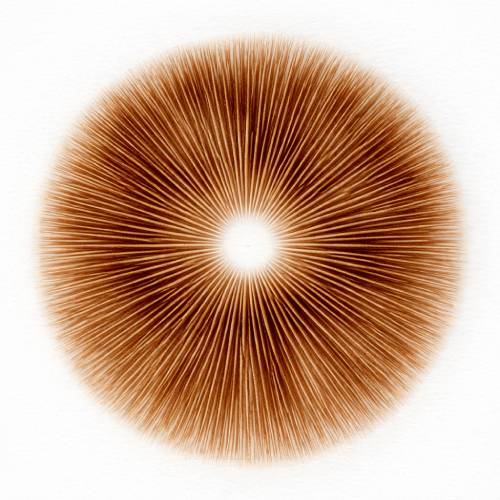
Visually, the spore prints are usually deep purple-brown, sometimes leaning toward dark violet-black depending on maturity. The caps they originate from are large, often caramel-colored, and shift to a golden tone as they age.
Under magnification, the spores are sub-ellipsoid and thick-walled, which makes identification easier compared to lighter or less defined strains. This is one of the reasons they’re popular among collectors and microscopy enthusiasts.
Another standout feature is the rhizomorphic growth pattern associated with Ecuador genetics. While you’re not cultivating, this trait still matters because it reflects the underlying strength and structure of the spores themselves.
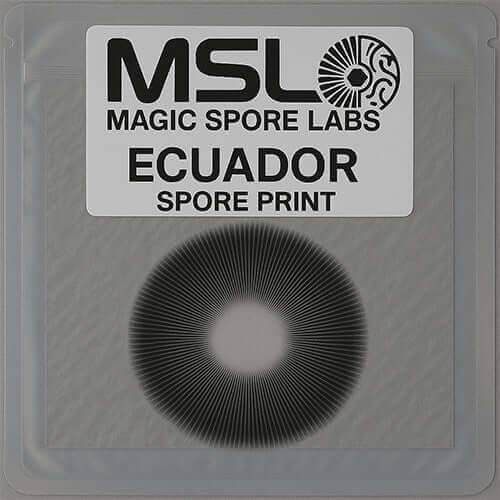
Ecuador Mushroom Spore Prints
$24.99
$37.48
Ecuador Spore Print The Ecuador strain is one of the most well-regarded Psilocybe cubensis varieties, known for its resilience and reliable spore structure. Originally discovered in the Ecuadorian highlands, this strain has been valued by researchers for its robust genetics… read more

Performance Breakdown
Clarity (Microscopy Experience)
This is where Ecuador mushroom spore prints really shine. The density of the deposit makes it easy to isolate spores under the lens. You don’t have to hunt around like you would with lighter prints.
In my experience, focusing is smoother because the spores are well-defined and consistent in shape. That alone saves time during longer study sessions.
Consistency
Across multiple prints, I noticed a high level of consistency. The color, density, and structure stayed fairly uniform, which isn’t always the case with other cubensis varieties.
This makes them ideal if you’re comparing samples or documenting differences over time.
Handling and Storage
The prints are usually delivered on sterile foil, which holds up well. As long as you keep them sealed and away from moisture, they maintain quality for extended periods.
I’ve revisited prints weeks later and still had clean, usable samples.
Reliability
One of the biggest advantages is how forgiving they are. Even if your setup isn’t perfect, Ecuador mushroom spore prints still provide solid results.
That reliability is a big reason they’re recommended for beginners.
Pros and Cons
Pros
- Dark, dense spore deposits that are easy to study
- Highly consistent across multiple prints
- Resilient genetics from Andean origins
- Beginner-friendly and forgiving
- Strong visual clarity under magnification
Cons
- Quality can vary depending on the supplier
- Some prints may have uneven edges or lighter sections
- Less unique visually compared to rarer exotic strains
Common Problems and Fixes
Problem: Faint or Patchy Print
This usually comes down to the supplier rather than the strain itself. Ecuador prints are naturally dense, so if it looks weak, it’s likely a quality issue.
Fix: Switch vendors or look for prints with visibly darker deposits before purchasing.
Problem: Difficulty Focusing Under Microscope
Sometimes debris or condensation can interfere with clarity.
Fix: Ensure your slide is clean and dry, and adjust lighting rather than over-focusing.
Problem: Degraded Print Over Time
If stored improperly, prints can lose integrity.
Fix: Keep them in a cool, dry place inside sealed packaging. Avoid humidity at all costs.
Who Should Buy It
Ecuador mushroom spore prints are a great choice if you’re new to microscopy and want something reliable. They’re also ideal if you’re building a collection and want a strain that consistently delivers clean, study-friendly samples.
If you’re more advanced, they still hold value due to their structural clarity and dependable characteristics. However, if you’re chasing rare or visually unusual strains, you might find them a bit standard.
For most people though, they strike a really solid balance between quality and ease of use.
Comparison: Ecuador vs Golden Teacher Spore Prints
Compared to Golden Teacher prints, Ecuador mushroom spore prints tend to be denser and easier to work with under magnification.
Golden Teacher prints can sometimes appear lighter and require more careful handling to get the same level of clarity. Ecuador prints feel more straightforward, especially for beginners.
On the other hand, Golden Teacher has a more recognizable name and broader popularity, which can make it appealing for collectors.
In terms of reliability and ease of study, Ecuador prints come out ahead in my experience.
Where to Buy
You can find Ecuador mushroom spore prints from reputable microscopy-focused suppliers like Magic Spore Labs and similar vendors that specialize in sterile, high-quality prints.
Look for sellers that clearly show the print density and packaging. Avoid listings that look overly generic or don’t provide real product images.
If you’re already exploring related topics like psilocybin spores or cubensis variants, it’s worth checking suppliers that offer multiple strains so you can compare quality directly.
FAQs
Are Ecuador mushroom spore prints good for beginners?
Yes, they’re one of the most beginner-friendly options due to their dense deposits and forgiving nature during microscopy.
What color are Ecuador spore prints?
They’re typically deep purple-brown, sometimes appearing almost black depending on the thickness of the deposit.
How should I store spore prints?
Keep them sealed in a cool, dry place away from humidity and direct light to maintain quality.
Why are Ecuador mushroom spore prints popular?
Their resilience, consistent structure, and clear visibility under magnification make them a top choice for collectors and researchers.
Are spore prints legal?
In many areas, spore prints are legal for microscopy purposes since they don’t contain active compounds found in mature mushrooms. Always check your local laws before purchasing.