
Table of Contents
- Key Takeaways
- What Are Corumba Mushroom Spore Prints?
- The Brazilian Lineage of Corumba Spores
- Key Characteristics of Corumba Spore Prints
- What Makes Corumba Different from Other Cubensis Strains
- Common Uses of Spore Prints (Microscopy Focus)
- How to Identify a High-Quality Spore Print
- Storage Tips for Spore Prints
- Who Corumba Spore Prints Are Best For
- Pros and Cons of Corumba Spore Prints
- Final Verdict: Are Corumba Spore Prints Worth Exploring?
- FAQs
If you’ve been exploring unique mushroom genetics, corumba mushroom spore prints are one of those names that keeps coming up, and for good reason. These prints come from a Brazilian lineage of Psilocybe cubensis known for their dark coloration and clean structure under the microscope. What makes them stand out is their consistent morphology and strong connection to tropical environments in Brazil.
In simple terms, corumba mushroom spore prints are collections of spores from a Brazilian cubensis variety, typically showing a deep purple-brown color and well-defined print pattern. They’re popular among microscopy enthusiasts and collectors who appreciate reliable, visually clear spores with a strong lineage background.
Key Takeaways
- Corumba mushroom spore prints come from a Brazilian Psilocybe cubensis lineage.
- They typically show a dark purple-brown color and dense spore distribution.
- Microscopy reveals ovoid to ellipsoid spores with clear visibility.
- They are valued for consistency and clean print quality.
- Collectors often seek them for their stable Brazilian genetic traits.
What Are Corumba Mushroom Spore Prints?
Corumba mushroom spore prints are dark, dense spore deposits from a Brazilian Psilocybe cubensis strain. They are commonly used for microscopy and research due to their clarity, consistent structure, and reliable lineage traits.
The Brazilian Lineage of Corumba Spores
The story behind corumba spores starts in Brazil, where tropical climates create ideal conditions for cubensis varieties. This region is known for producing resilient and visually distinct strains, and Corumba fits right into that pattern.
As part of the broader group of brazilian cubensis strains, Corumba carries traits shaped by warm temperatures and humid environments. These conditions tend to produce strong, stable genetics, which show up clearly when you examine mushroom spore prints under magnification.
Geography plays a bigger role than most people think. Strains originating from subtropical regions often develop consistent characteristics over time. With corumba mushroom spore prints, that consistency is one of the biggest reasons collectors trust them for microscopy work.
Corumba Mushroom Spore Prints
$24.99
$37.48
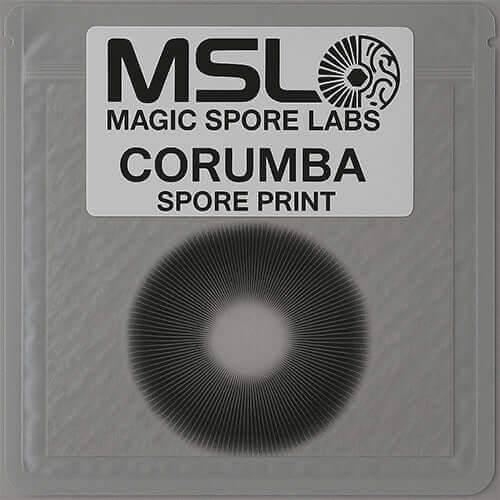
Corumba Spore Print The Corumba Mushroom Spore Print from Magic Spore Labs delivers basidiospores from a geographically specific Brazilian wild-collect of Psilocybe cubensis — a variety documented in the research community since the early 2010s and named for the Corumbá… read more

Key Characteristics of Corumba Spore Prints
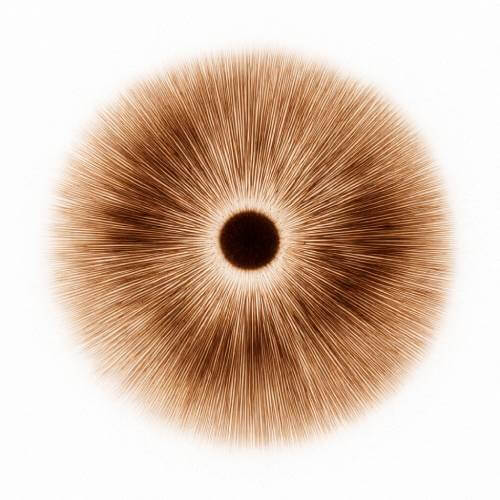
One of the first things you’ll notice about corumba mushroom spore prints is the color. They typically range from dark purple-brown to deep purple, which is standard for psilocybe cubensis spores but often appears especially rich in this lineage.
The print itself is usually dense and well-defined. A good Corumba print spreads evenly across foil or paper, creating a solid, almost velvety look. This makes it easier to observe details without gaps or inconsistencies.
Under the microscope, corumba spores tend to be ovoid or slightly ellipsoid. They’re easy to spot and measure, which is one reason microscopy spores from this lineage are often recommended for clear observation.
Another subtle detail is visibility. Some prints can look faint or uneven, but corumba mushroom spore prints usually show strong contrast, making structural features easier to study.
What Makes Corumba Different from Other Cubensis Strains
Compared to other psilocybe cubensis spores, Corumba stands out for its balance of density and consistency. While many strains share similar spore shapes, the overall print quality and lineage stability set this one apart.
Take Golden Teacher, for example. It’s widely known and often produces lighter, slightly more variable prints. Corumba, on the other hand, tends to be darker and more uniform.
B+ is another common comparison. It’s known for versatility, but its prints can sometimes vary in density. Corumba mushroom spore prints usually maintain a more even distribution, which can make microscopy work a bit easier.
| Feature | Corumba | Golden Teacher | B+ |
|---|---|---|---|
| Origin | Brazil | Unknown/Commercial | Unknown |
| Spore Color | Dark purple-brown | Purple-brown | Purple-brown |
| Print Density | High and consistent | Moderate | Variable |
| Microscopy Clarity | Very clear | Good | Moderate |
Common Uses of Spore Prints (Microscopy Focus)
Most people interested in corumba mushroom spore prints are focused on microscopy. The goal is to observe spore shape, size, and structure in a controlled setting.
These prints are also popular among collectors who value clean, well-formed samples. A strong print isn’t just functional—it also reflects the quality of the specimen it came from.
Because corumba spores tend to be consistent, they’re often used as a reference point when comparing other mushroom spore prints. That reliability makes them a solid addition to any microscopy collection.
How to Identify a High-Quality Spore Print
- Dark, well-defined print with even coverage
- Clean foil or paper backing without debris
- No visible signs of contamination or discoloration
When evaluating corumba mushroom spore prints, these factors matter more than anything else. Even a strong lineage won’t look good if the print itself is poorly handled.
Storage Tips for Spore Prints
- Store in a cool, dark environment
- Keep in airtight containers or sealed bags
- Avoid moisture exposure at all costs
Proper storage helps preserve the clarity and structure of microscopy spores over time. Heat and humidity are the biggest risks, so keeping conditions stable is key.
Who Corumba Spore Prints Are Best For
Corumba mushroom spore prints are a great choice for beginners who want something easy to observe. The clear structure and dense prints make them less frustrating to work with compared to lighter or inconsistent samples.
At the same time, experienced collectors often appreciate the lineage itself. Brazilian cubensis strains have a reputation for stability, and Corumba reflects that well.
If you’re specifically interested in regional genetics or comparing different psilocybe cubensis spores, this is one of the more reliable options out there.
Pros and Cons of Corumba Spore Prints
Pros:
- Dense, dark, and easy-to-read prints
- Strong Brazilian lineage with consistent traits
- Clear microscopy visibility
Cons:
- Less variety compared to more widely distributed strains
- Can be harder to find from trusted sources
- Subtle differences may not stand out to casual observers
Final Verdict: Are Corumba Spore Prints Worth Exploring?
Corumba mushroom spore prints are definitely worth exploring if you care about clean structure and reliable lineage. They may not be the flashiest option, but they deliver where it counts—clarity, consistency, and strong Brazilian genetics.
For microscopy and collection purposes, they strike a nice balance between beginner-friendly and detail-rich. If you’re building out a collection of mushroom spore prints or comparing brazilian cubensis strains, Corumba is a solid, dependable choice.
At the end of the day, corumba mushroom spore prints stand out not because they’re rare or trendy, but because they consistently do what they’re supposed to do—and that’s exactly what serious collectors look for.
FAQs
Are Corumba mushroom spore prints good for beginners?
Yes, corumba mushroom spore prints are beginner-friendly because they tend to be dense, dark, and easy to observe under a microscope. Their clear structure makes them less frustrating compared to lighter or uneven prints.
What color are Corumba spores?
Corumba spores typically appear dark purple-brown to deep purple, which is characteristic of psilocybe cubensis spores. This rich color often makes the print look more defined and easier to study.
What makes Corumba different from other cubensis strains?
Corumba stands out for its consistent print density and strong Brazilian lineage. Compared to other cubensis strains, the spore prints are usually more uniform, making them a reliable choice for microscopy and collection purposes.