
Table of Contents
- 1. What Are Psilocybin Spores?
- 2. Taxonomy, Morphology, and Why It Matters for Research
- 3. The Legal Landscape: What Researchers Need to Know
- 4. How to Evaluate Quality Before You Buy
- 5. Choosing the Right Strain for Your Research
- 6. Where to Buy Psilocybin Spores and What to Expect
- Start Your Research With Confidence
- FAQs
Magic Spore Labs — Research & Education
1. What Are Psilocybin Spores?
Psilocybin spores are the reproductive units of fungi belonging to the genus Psilocybe and related genera. Functionally analogous to seeds in plants, spores carry the genetic blueprint of the organism in a dormant, durable form. Unlike the fruiting body of the mushroom — which contains psilocybin and psilocin — spores contain neither compound. They are, at the cellular level, inert biological material: a nucleus, stored nutrients, and a protective outer wall built to survive environmental stress.
This distinction is scientifically important and legally significant, which is why psilocybin spores occupy a unique position in both the research world and the regulatory landscape. They are the starting point for mycological study — observable under a standard light microscope, documentable, and rich with morphological data that researchers have only begun to fully characterize.
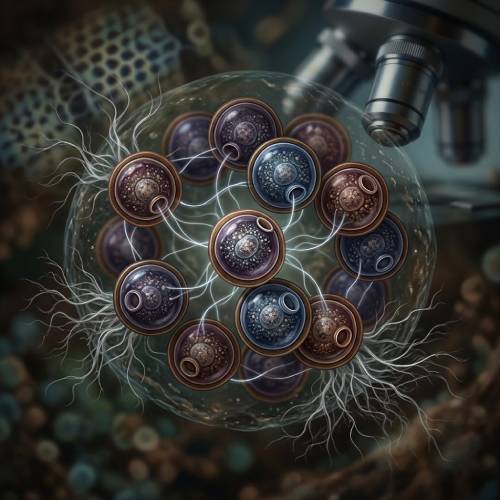
Each spore is microscopic, typically measuring between 8 and 18 micrometers depending on species and strain. Under magnification, they reveal a precise architecture: a two-layered wall, a visible germ pore, and pigmentation that varies meaningfully across strains. This is where the science begins — at the level of the individual cell, before any other variables enter the picture.
Psilocybin spores contain no psilocybin or psilocin. They are the dormant, pre-germination form of the organism — the subject of microscopy research, not the source of psychoactive compounds.
2. Taxonomy, Morphology, and Why It Matters for Research
Understanding the taxonomy of psilocybin-producing fungi is foundational to meaningful research. The genus Psilocybe contains over 200 recognized species, distributed across every continent except Antarctica. Of these, Psilocybe cubensis is by far the most studied — not only because of its widespread geographic distribution, but because of the consistency and accessibility of its spore characteristics for microscopy research.
Taxonomic Classification
Spore Morphology Basics
Psilocybe cubensis spores are basidiospores — produced on the gill surface of the fruiting body and dispersed as the organism's primary means of reproduction. Under a light microscope, they display a characteristic subellipsoid to ellipsoid shape with a thick, smooth double-layered wall. The outer wall carries the pigmentation responsible for the dark purplish-brown color of a fresh spore print. The inner wall is lighter and becomes clearly visible under phase-contrast illumination.
Key morphological data points for P. cubensis spores documented in the scientific literature:
- Size range: 8.8–15 μm × 5.5–8 μm (length × width, varies by strain)
- Shape: subellipsoid to broadly ellipsoid, smooth wall surface
- Wall structure: two-layer (bilayered), clearly visible under phase-contrast at 1000x
- Germ pore: apical, truncate, visible under high magnification
- Pigmentation: pale yellow-brown to dark reddish-brown in KOH solution
- Deposit color: dark purplish-brown to near-black
These characteristics are the baseline that every serious microscopist works from. Deviations from documented norms — unexpected size ranges, irregular wall structure, atypical pigmentation — are scientifically significant observations, not errors. Understanding the baseline is what makes anomalies detectable.
For a deep dive into how morphological characteristics differ across specific strains and what those differences mean for your research:
Psilocybe Cubensis Strain Selection Guide →3. The Legal Landscape: What Researchers Need to Know
The legal status of psilocybin spores in the United States is frequently misunderstood — and the misunderstanding runs in both directions. Many researchers believe spores are uniformly illegal. Many vendors imply they're uniformly legal. Neither is accurate. The reality is nuanced, jurisdiction-dependent, and worth understanding precisely before you purchase.
The Federal Position
Psilocybin and psilocin are Schedule I controlled substances under the federal Controlled Substances Act. The mushroom fruiting body, which contains these compounds, falls under federal prohibition. Spores, however, present a distinct legal question: they contain neither psilocybin nor psilocin in their dormant state. No federal statute explicitly prohibits the possession of Psilocybe spores for microscopy or research purposes, and this has been the basis for their legal sale across most of the United States for decades.
State-by-State Status
Legal for Research & Microscopy
Psilocybin spores are legal to purchase, possess, and use for microscopy research in the vast majority of US states. This includes major states such as Florida, Texas, New York, Colorado, Oregon, Washington, and most others not listed in the restricted column.
Restricted — Do Not Ship
California, Georgia, and Idaho have enacted state-level laws that explicitly prohibit psilocybin spores regardless of intended use. Reputable vendors will not ship to these states. Purchasing from vendors who ship to these states regardless is a legal risk.
Laws change. Before purchasing, confirm the current legal status of psilocybin spores in your state. This guide reflects the regulatory landscape as of early 2026, but it is not legal advice. When in doubt, consult a licensed attorney in your jurisdiction.
Why the Research Framing Matters Legally
The legal protection that covers psilocybin spores is explicitly tied to research and microscopy use. Purchasing spores for any purpose other than legitimate scientific study operates in legally ambiguous territory at best. Reputable vendors — including Magic Spore Labs — sell exclusively for microscopy and research purposes. This framing isn't a technicality. It's the legal basis on which the entire market operates, and it's the researcher's responsibility to understand and honor it.
4. How to Evaluate Quality Before You Buy
The single most common problem researchers encounter isn't legal — it's quality. Contaminated samples, misrepresented strains, and degraded spore material are widespread in a market with minimal regulatory oversight and a wide range of vendor sophistication. Knowing how to evaluate quality before you purchase is not optional knowledge. It's the difference between productive research and wasted time and materials.
Production Standards That Matter
Serious vendors produce spore samples in ISO-certified cleanroom environments with HEPA-filtered airflow. HEPA filtration removes particulates at 99.97% efficiency down to 0.3 microns — the size range most relevant to biological contamination. A cleanroom isn't a marketing claim you can fake. Either the infrastructure exists or it doesn't, and the quality of your sample will reflect the answer.
All sample preparation should occur under a laminar flow hood — a device that maintains unidirectional airflow to continuously push contaminants away from the work surface. This eliminates ambient air as a contamination vector, which is one of the primary failure points in low-quality production environments.
Reputable vendors don't release batches immediately after production. A mandatory hold period — typically several days to a week — allows latent contamination to surface under controlled conditions before the sample ships. If contamination appears during this period, the batch is rejected. This step is skipped by most vendors because it slows production. It's one of the most meaningful quality differentiators in the market.
Post-hold, quality batches are tested via agar plating for sterility and phase-contrast microscopy for spore viability. A contaminated agar plate disqualifies the batch. Spores that don't display intact bilayered wall structure under phase-contrast don't ship. This is the minimum acceptable testing standard for research-grade material.
For a full breakdown of Magic Spore Labs' lab standards, testing protocols, and what to look for when you receive your sample:
Research-Grade Spores: Our Lab Standards Explained →
5. Choosing the Right Strain for Your Research
Not all Psilocybe cubensis strains are morphologically equivalent. Spore dimensions, shape distribution, wall structure, and pigmentation vary meaningfully across strains — and those differences have real implications for what kind of research you can do and how accessible your early observations will be.
The most useful framework for strain selection isn't difficulty — it's research complexity, specifically how much published morphological documentation exists for a given strain and how consistent its characteristics are across samples.
Tier 1 — Well-Documented, High ConsistencyThe benchmark strain for standardized microscopy research. Consistent ellipsoid morphology, well-documented size range (11–14 μm), reliable spore density. Extensive published reference material makes it ideal for researchers building foundational observation skills.
One of the most extensively studied strains in independent mycology research. Robust genetic expression and consistent morphological characteristics across samples make it a dependable baseline strain.
Originally documented from Thailand's Koh Samui island. Known for genetic stability and consistent spore characteristics. Useful for researchers studying geographic strain variation within the species
Tier 2 — Intermediate Complexity, Higher Variability
The foundational strain for studying phenotypic variation within P. cubensis. Documented size distribution of 11.5–18 μm × 8–12 μm makes it particularly valuable for researchers studying genetic expression range and intra-species comparison.
Originally documented in southeastern Australia. Known for robust spore production and distinct coloration characteristics. A natural progression for researchers ready to work with more morphologically expressive samples.
Unique genetic expression and distinct morphological characteristics. Limited published literature makes this strain particularly valuable for original research contribution.
Developed by Canadian mycologist SporePod. Documented for notable size characteristics and traceable genetic lineage. Well-regarded in the research community for consistent, high-quality specimens.
A rare specimen for researchers interested in unusual phenotypic expression and genetic outliers within the species. For researchers pushing into undocumented territory.
Golden Mammoth Mushroom Spore Syringe
$24.99
Golden Mammoth Liquid Spores While some people filled their time with Walkmans and AOL in the 1990s, Canadian mycologist, SporePod, chose to develop a strain with a virus-free genetic line through a process of selective breeding. The result? Golden Mammoth… read more

6. Where to Buy Psilocybin Spores and What to Expect
The psilocybin spore market is unregulated, which means quality, legitimacy, and reliability vary enormously across vendors. Knowing what to look for in a vendor — and what should concern you — is as important as knowing what to look for in the spores themselves.
What a Legitimate Vendor Looks Like
- Sells explicitly for microscopy and research purposes — not vaguely described "other uses"
- Does not ship to California, Georgia, or Idaho
- Documents production standards — cleanroom, laminar flow, testing protocols
- Has transparent strain information — origin, documented characteristics, what to expect under the scope
- Provides clear storage guidance with each order
- Has a verifiable track record — reviews, community presence, longevity in the market
What Should Concern You
- Vendors who ship to all 50 states without restriction
- No mention of lab or production conditions anywhere on the site
- Vague or absent strain documentation
- Prices significantly below market — clean production has real costs
- No compliance language around research and microscopy use
What to Expect When Your Order Arrives
A quality spore syringe should arrive sealed, clearly labeled with strain name, and packaged to protect temperature stability in transit. The suspension inside should be clear to slightly hazy with fine, evenly distributed spore material — not cloudy, not clumped, not visibly contaminated.
Store your syringes immediately at 2–8°C in a dark environment. Avoid temperature fluctuations and UV light exposure. Under proper storage conditions, liquid spore syringes maintain optimal viability for 2–3 years. Spore prints, when stored correctly in a sealed, cool, dark environment, can remain viable for a decade or longer.
When you're ready to put a sample on a slide, you should see the characteristic ellipsoid morphology and bilayered wall structure within minutes at 400x. If you're not seeing structural integrity and clean morphology, contact the vendor before assuming the issue is with your technique.
Start Your Research With Confidence
Every strain in the Magic Spore Labs catalogue is produced in a controlled cleanroom environment, tested before it ships, and sold exclusively for microscopy and research purposes. Browse the full collection and find the strain that fits your research goals.
Browse the Full Catalogue →All Magic Spore Labs products are sold strictly for microscopy and research purposes in accordance with applicable laws. Not intended for cultivation or consumption. Psilocybin spores are illegal in California, Georgia, and Idaho — we do not ship to these states.
FAQs
Are psilocybin spores legal to purchase in the United States?
Psilocybin spores are legal to purchase and possess for microscopy research in most U.S. states because they do not contain psilocybin or psilocin. However, they are restricted in states like California, Georgia, and Idaho, so it’s important to check your local laws before ordering.
Do psilocybin spores contain any active compounds?
No, psilocybin spores do not contain psilocybin or psilocin. They are considered dormant biological material used for research and microscopy purposes, which is why they are treated differently from the mushroom fruiting body
How can I tell if a spore sample is high quality?
A high-quality spore sample should be produced in a clean environment, tested for contamination, and show clear, evenly distributed spores without clumping. Reputable vendors also use cleanroom production, laminar flow hoods, and verification testing before shipping.