

Table of Contents
- Introduction to FMP Mushroom Spore Prints
- What Are Spore Prints and Why Do They Matter?
- How FMP Mushroom Spore Prints Are Collected
- Key Features Researchers Should Analyze
- Microscopy Applications of FMP Mushroom Spore Prints
- Storage and Preservation Best Practices
- Common Mistakes to Avoid
- Why FMP Mushroom Spore Prints Stand Out
- Applications Beyond Identification
- Conclusion
- FAQs
Quick Answer: FMP Mushroom Spore Prints are dense deposits of spores collected from a mushroom cap, primarily used for identification, microscopy, and research purposes. They provide critical insight into spore color, structure, and genetic traits.
Introduction to FMP Mushroom Spore Prints
Understanding FMP Mushroom Spore Prints is essential for anyone involved in mushroom research, taxonomy, or microscopy. These prints serve as a foundational tool for studying fungal biology and identifying species with precision.
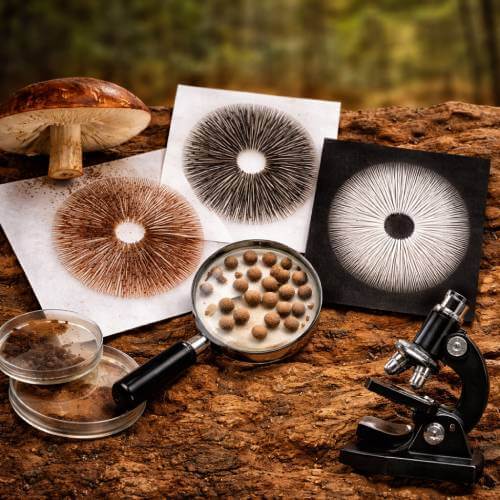
At their core, spore prints are created when spores fall naturally from a mushroom’s gills or pores onto a clean surface. The result is a visible, often intricate pattern that reflects the reproductive characteristics of the organism.
In research contexts, FMP Mushroom Spore Prints are valued for their clarity, density, and consistency, making them ideal for both beginners and experienced analysts.
What Are Spore Prints and Why Do They Matter?
Spore prints are the powdery deposits of microscopic spores released by mature mushrooms. While they may appear simple at first glance, they hold a wealth of information for researchers.
The color of spore prints is one of the most important diagnostic features in mushroom identification. Variations in hue, from deep purple-brown to rusty orange, can help distinguish between closely related species.
In the case of FMP Mushroom Spore Prints, the emphasis is on high-quality, well-formed deposits that allow for accurate observation under magnification.
FMP Mushroom Spore Prints
$24.99
$37.48
FMP Spore Print The FMP Spore Print is a highly regarded choice for researchers seeking a reliable and authentic sample of the FMP strain. Known for its distinct genetics and unique characteristics, the FMP strain has become a favorite among… read more

How FMP Mushroom Spore Prints Are Collected
The collection process for FMP Spore Prints is straightforward but requires attention to detail to ensure quality results.
Step-by-Step Collection Process
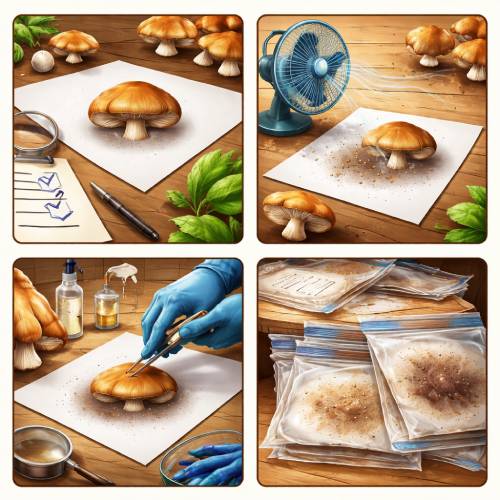
First, a mature mushroom cap is carefully removed from the stem. The cap is then placed gill-side down on a sterile surface such as glass, foil, or paper.
Next, the cap is covered with a container to prevent airflow disturbances. Over a period of 12 to 24 hours, spores fall naturally, forming a visible print.
Finally, the cap is removed, revealing a detailed spore pattern. This process ensures that FMP Mushroom Spore Prints maintain their integrity for research use.
Key Features Researchers Should Analyze
When examining FMP Spore Prints, several characteristics are particularly important:
- Color: Indicates species classification
- Density: Reflects spore production levels
- Pattern: Provides insight into gill structure
- Texture: Helps determine spore distribution quality
These attributes make spore prints an indispensable diagnostic tool for fungal identification and classification.
Microscopy Applications of FMP Mushroom Spore Prints
One of the primary uses of FMP Spore Prints is microscopic analysis. Under magnification, researchers can observe spore size, shape, and surface features.
This level of detail allows for:
- Accurate species differentiation
- Documentation of spore morphology
- Comparative analysis across strains
High-quality spore prints ensure that these observations are consistent and reliable.
Storage and Preservation Best Practices
Proper storage is essential to maintain the usability of FMP Spore Prints. Exposure to moisture, heat, or contamination can degrade the sample.
To preserve spore prints effectively:
- Store in a cool, dry environment
- Use airtight containers or sealed bags
- Avoid direct sunlight
- Handle with sterile tools
Following these practices helps extend the lifespan of your samples and ensures they remain viable for future study.
Common Mistakes to Avoid
Even experienced researchers can encounter issues when working with FMP Spore Prints. Avoiding these common mistakes can significantly improve results:
- Using immature caps that produce weak prints
- Allowing airflow to disrupt spore deposition
- Contaminating the surface during collection
- Improper storage leading to degradation
Attention to detail during both collection and storage is key to maintaining high-quality spore prints.
Why FMP Mushroom Spore Prints Stand Out
Not all spore prints are created equal. FMP Spore Prints are specifically valued for their consistency and clarity, which are critical for research applications.
Compared to lower-quality samples, they offer:
- More reliable microscopy results
- Better-defined coloration
- Higher spore density
- Improved reproducibility in studies
These advantages make them a preferred choice for serious researchers and collectors.
Applications Beyond Identification
While identification is a primary use, FMP Spore Prints also play a role in broader research and documentation efforts.
They can be used for:
- Archiving fungal genetics
- Creating reference libraries
- Studying environmental adaptations
- Supporting educational demonstrations
This versatility highlights the importance of maintaining high-quality spore prints in any research setting.
Conclusion
FMP Mushroom Spore Prints are a cornerstone of mushroom research, offering valuable insights into species identification, morphology, and classification. Their reliability, ease of collection, and versatility make them an essential tool for both beginners and advanced researchers.
By understanding how to properly collect, analyze, and store these prints, researchers can unlock a deeper level of precision in their work. Whether you are building a reference library or conducting detailed microscopy, high-quality spore prints provide the foundation for accurate and meaningful results.
FAQs
What are FMP Mushroom Spore Prints used for?
They are primarily used for identification, microscopy, and research, allowing detailed observation of spore characteristics.
How long does it take to create a spore print?
Most spore prints form within 12 to 24 hours, depending on the maturity of the mushroom and environmental conditions.
Can spore prints be stored long-term?
Yes, when kept in a cool, dry, and sterile environment, spore prints can remain usable for extended periods.