

Jack Frost spores have become a point of interest among microscopy enthusiasts and researchers who focus on visual documentation and comparative observation. Known for their distinctive lineage and visual traits under magnification, these spores are often studied for pattern consistency, clarity, and structure rather than for cultivation purposes. This guide is written strictly from a research and microscopy perspective, focusing on what observers typically document, how they prepare slides, and how they preserve samples for ongoing study.
Overview
Jack Frost spores are commonly examined in microscopy settings due to their recognizable appearance and consistency across samples. Researchers are typically interested in how these spores present under different magnifications, lighting conditions, and slide preparation techniques. Rather than focusing on outcomes or applications, the emphasis remains on observation, comparison, and accurate documentation.
At a high level, researchers look for:
- Overall spore shape and symmetry
- Wall definition and edge clarity
- Color tone and translucency
- Consistency across multiple slides or sessions
These characteristics help determine whether a sample is suitable for long-term reference, educational use, or comparative microscopy studies. Jack Frost spores are often included in personal reference libraries because their visual traits tend to be stable when properly stored and handled.
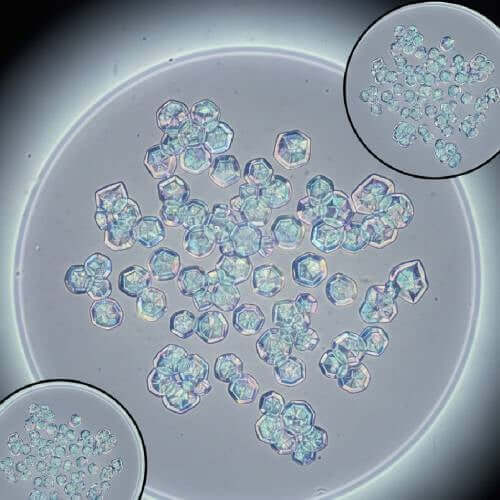
Visual Documentation Guide
Visual documentation is one of the most important aspects of studying Jack Frost spores. Clear, repeatable images allow researchers to compare observations over time and share findings within microscopy-focused communities.
When documenting spores visually, researchers typically focus on:
- Magnification levels (commonly 400x to 1000x)
- Lighting consistency to avoid color distortion
- Clean slide backgrounds to reduce visual noise
- Multiple angles or focal planes
Many researchers prefer to document the same sample under different magnifications to capture both overall structure and fine detail. Adjusting the condenser and diaphragm can help enhance contrast, making spore walls and internal features easier to distinguish.
Keeping a visual log is also common. This may include labeled images with dates, magnification settings, and notes about slide preparation methods. Over time, this creates a reliable visual record that can be referenced during future sessions.
Jack Frost Mushroom Spore Syringe
$24.99
Jack Frost Liquid Spores Jack Frost Liquid Spores offer an exciting opportunity for mycology enthusiasts and researchers seeking a unique addition to their collection. This premium product contains 10cc of liquid spores from the Jack Frost strain of Psilocybe cubensis,… read more

Microscopy Checklist
Before beginning any observation session, experienced researchers often follow a consistent checklist. This helps ensure that results are repeatable and that observations remain focused on visual accuracy.
A typical microscopy checklist may include:
- Clean microscope lenses and stage
- Sterile slides and cover slips
- Properly mixed spore suspension (if applicable)
- Consistent mounting medium
- Calibrated magnification settings
During observation, researchers often take notes on spore density, distribution across the slide, and any visual anomalies. These notes are not used to draw conclusions beyond what is visible, but rather to support ongoing comparison and learning.
Jack Frost mushroom spores are often revisited across multiple sessions. Using the same checklist each time helps reduce variables and ensures that differences observed are due to the sample itself rather than changes in technique.

Storage Tips
Proper storage plays a key role in maintaining the visual integrity of Jack Frost spores for microscopy. Researchers who plan to revisit samples over weeks or months pay close attention to environmental factors that could affect clarity or consistency.
Common storage considerations include:
- Keeping samples in a cool, dark environment
- Avoiding repeated temperature fluctuations
- Storing slides in protective cases to prevent dust exposure
- Labeling all samples clearly with dates and identifiers
For liquid samples, gentle handling is important. Agitating containers unnecessarily can introduce bubbles or uneven distribution, which may affect slide preparation later. For prepared slides, sealing edges can help reduce evaporation and maintain visual quality for longer periods.
Researchers often maintain a simple inventory system so older samples can be compared with newer ones. This practice supports long-term observation without relying on memory alone.
Conclusion
From a research and microscopy standpoint, Jack Frost spores offer an engaging subject for visual study and documentation. Their consistent appearance, when properly handled and stored, makes them well-suited for building reference collections and refining observation techniques. By focusing on careful slide preparation, structured documentation, and thoughtful storage, researchers can get the most out of their microscopy sessions while maintaining a clear, educational approach.
Whether used for personal learning or comparative observation, Jack Frost spores remain a valuable point of interest for those dedicated to microscopy-focused research and visual analysis.
FAQs
What makes Jack Frost spores interesting to observe?
They are often noted for consistent visual traits that make them useful for comparative microscopy and documentation practice.
Do researchers need advanced equipment to view them?
A standard compound microscope with common magnification ranges is typically sufficient for clear observation.
How often should samples be re-examined?
How often should samples be re-examined?
Is note-taking important during observation?
Yes. Written notes help support visual records and make comparisons more accurate across sessions.