

Table of Contents
Getting started with mushroom spores can feel intimidating at first, especially if your interest is strictly limited to microscopy and lab-style observation. Between strain names, spore formats, and technical terminology, it’s easy to overthink the process. The good news is that some spores are naturally more approachable for beginners because they are consistent, easy to visualize, and forgiving when you’re still learning how to use a microscope.
This guide focuses entirely on microscopy-only use. No cultivation, no growing instructions, and no assumptions beyond laboratory observation. If you’re setting up your first slides, learning how to focus on spores, or practicing documentation and identification, these beginner-friendly spores provide a reliable starting point without unnecessary complexity.
What “Beginner-Friendly” Means for Microscopy
When spores are described as beginner-friendly in a microscopy context, it has nothing to do with potency, growth behavior, or outcomes. Instead, it refers to how easy they are to observe, distinguish, and document under standard lab equipment.
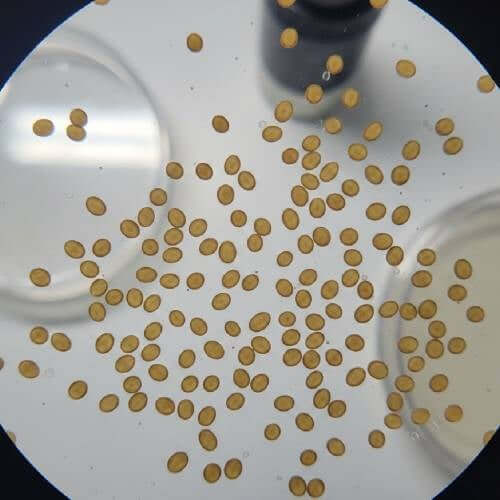
Beginner-friendly spores tend to share a few important traits. They usually have clearly defined shapes, consistent coloration, and predictable sizes that are easier to bring into focus at common magnifications. These characteristics reduce frustration when you’re still learning slide prep, lighting adjustments, and fine focus control.
Another factor is consistency across samples. Some spores vary widely in appearance from slide to slide, which can be confusing for new observers. Beginner options are more uniform, making it easier to recognize what you’re seeing and compare it to reference notes or microscopy guides.
In short, beginner-friendly spores help you focus on learning microscopy itself rather than struggling to interpret unclear or inconsistent visuals.
Beginner Spore Picks for Microscopy Observation
The following selections are commonly recommended for beginners because they offer clean morphology, recognizable traits, and reliable viewing experiences under standard compound microscopes. All references here are strictly for microscopy and educational observation.
Golden Teacher
Golden Teacher spores are often considered one of the most approachable options for beginners working with microscopy. Under magnification, the spores typically display a well-defined elliptical shape with clear pigmentation, making them easy to identify and focus on.
For someone new to slide preparation, Golden Teacher spores are forgiving. They tend to distribute evenly on slides and remain visible without requiring advanced lighting techniques. This makes them ideal for practicing basic skills like adjusting condenser height, diaphragm settings, and oil-free magnification.
B+
B+ spores are another beginner staple due to their consistency and clarity. When viewed under a microscope, they often appear uniform in size and shape, which is helpful when learning how to measure spores or compare multiple samples.
Beginners often appreciate B+ spores because they reduce visual noise. You’re less likely to second-guess whether what you’re seeing is an artifact or the spore itself, allowing you to focus on mastering microscope controls and documentation.
Amazonian
Amazonian spores are known for their bold, easily recognizable morphology. Under magnification, their darker pigmentation can stand out clearly against the slide background, making them easier to spot for beginners still developing their focusing technique.
These spores are particularly useful for practicing contrast adjustments and experimenting with different lighting angles. Their visibility helps build confidence when transitioning from lower to higher magnifications.
Amazonian Mushroom Spore Syringe
$24.99
Amazonian Liquid Spores Though brought to light more than 40 years ago, this Psilocybe cubensis strain, often referred to as Amazonian, remains one of the finest discoveries. With its origins in the Amazon rainforest, this psychedelic wonder is the jungle's gift to the… read more

Blue Meanie
Blue Meanie spores offer a slightly more distinctive appearance while still remaining approachable for beginners. Their shape and coloration can help new microscopists learn how to recognize subtle differences between strains.
While still beginner-friendly, Blue Meanie spores introduce just enough variation to encourage careful observation. This makes them a good step once you’re comfortable with basic focusing and want to start refining your identification skills.
Pink Buffalo
Pink Buffalo spores are often chosen by beginners who want exposure to a visually interesting but still manageable specimen. Under the microscope, these spores tend to show consistent structure, making them suitable for comparative study.
They’re especially helpful for practicing note-taking and sketching, as their morphology is distinct enough to document without being overly complex.
Stargazer
Stargazer spores round out this beginner list by offering a balanced combination of clarity and subtle detail. They are typically easy to bring into focus and maintain clarity across the field of view.
For beginners, Stargazer spores work well when learning to scan slides methodically, moving from low power to higher magnification while maintaining orientation and focus.
What to Look for Under the Microscope
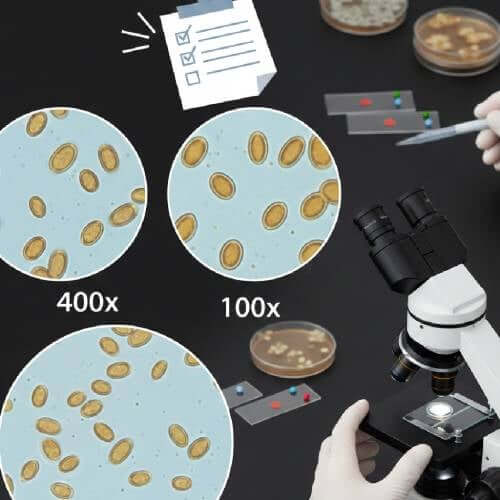
When examining spores for the first time, having a simple checklist can make the process feel far less overwhelming. These core features are a great place to start:
- Overall spore shape (elliptical, oval, or elongated)
- Color and pigmentation consistency
- Edge clarity and definition
- Uniformity across multiple spores
- Visibility at common magnifications such as 400x and 1000x
Focusing on these basics helps you avoid getting lost in advanced terminology too early. As your confidence grows, you can expand into more detailed observations like wall thickness or subtle surface textures.
Best Bundles for Beginners
For many beginners, starting with a bundle rather than a single spore type can be a smart move. Bundles allow you to compare different spores side by side, which accelerates learning and makes microscopy sessions more engaging.
A Pick 3 bundle is often ideal for absolute beginners. It provides enough variety to practice comparison without overwhelming you with too many samples at once. This approach works well when you’re still getting comfortable with slide preparation and microscope adjustments.
A Pick 5 bundle is better suited for beginners who already understand basic microscope operation and want to deepen their observation skills. With more samples available, you can practice distinguishing subtle differences in shape, color, and distribution across strains.
Bundles also encourage better documentation habits. Comparing multiple spores helps you develop consistent note-taking formats, which is an important skill in any microscopy-focused hobby or educational setting.
Conclusion
Choosing the right spores can make a significant difference when you’re first learning microscopy. Beginner-friendly options reduce frustration, build confidence, and allow you to focus on developing proper observation techniques rather than struggling to interpret unclear visuals.
By starting with well-known, consistent spores and gradually expanding into bundles, you create a smoother learning curve and a more enjoyable experience. Whether you’re documenting spores for personal study or simply exploring microscopy as a hobby, these beginner selections provide a reliable foundation for building long-term skills.
FAQs
Are these spores intended for growing?
No. This guide is strictly focused on microscopy-only observation and educational use. The spores discussed here are referenced solely for laboratory viewing and study.
Do I need an advanced microscope to view these spores?
Most beginners can observe these spores clearly using a standard compound microscope with common magnification ranges. Advanced equipment is not required to get started.
Which spore is the easiest for a first-time observer?
Golden Teacher and B+ are often considered the easiest starting points due to their consistency and clarity under magnification.
Should I start with a single strain or a bundle?
If you’re completely new, a small bundle can be helpful for learning comparison skills. If you prefer simplicity, starting with one strain is also perfectly fine.