
Table of Contents
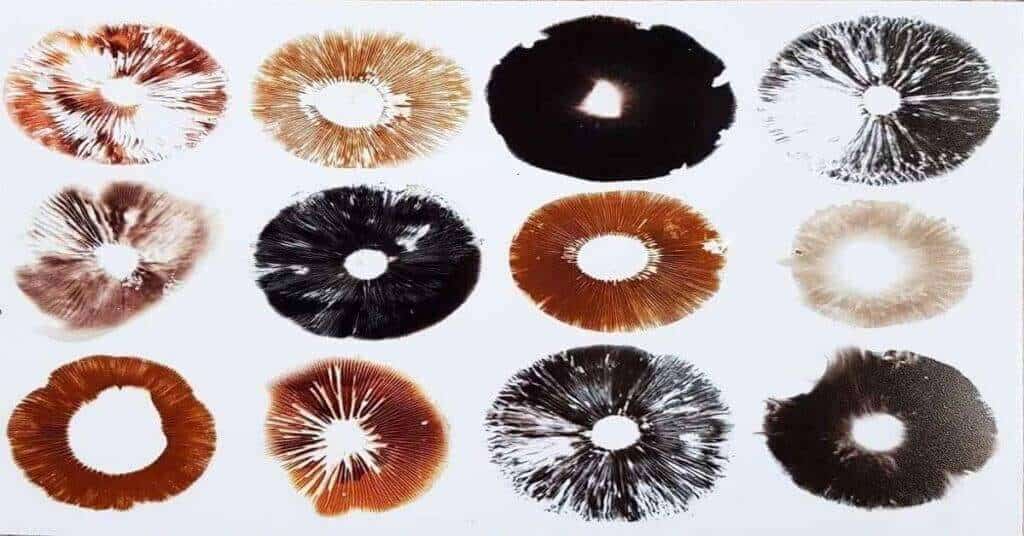
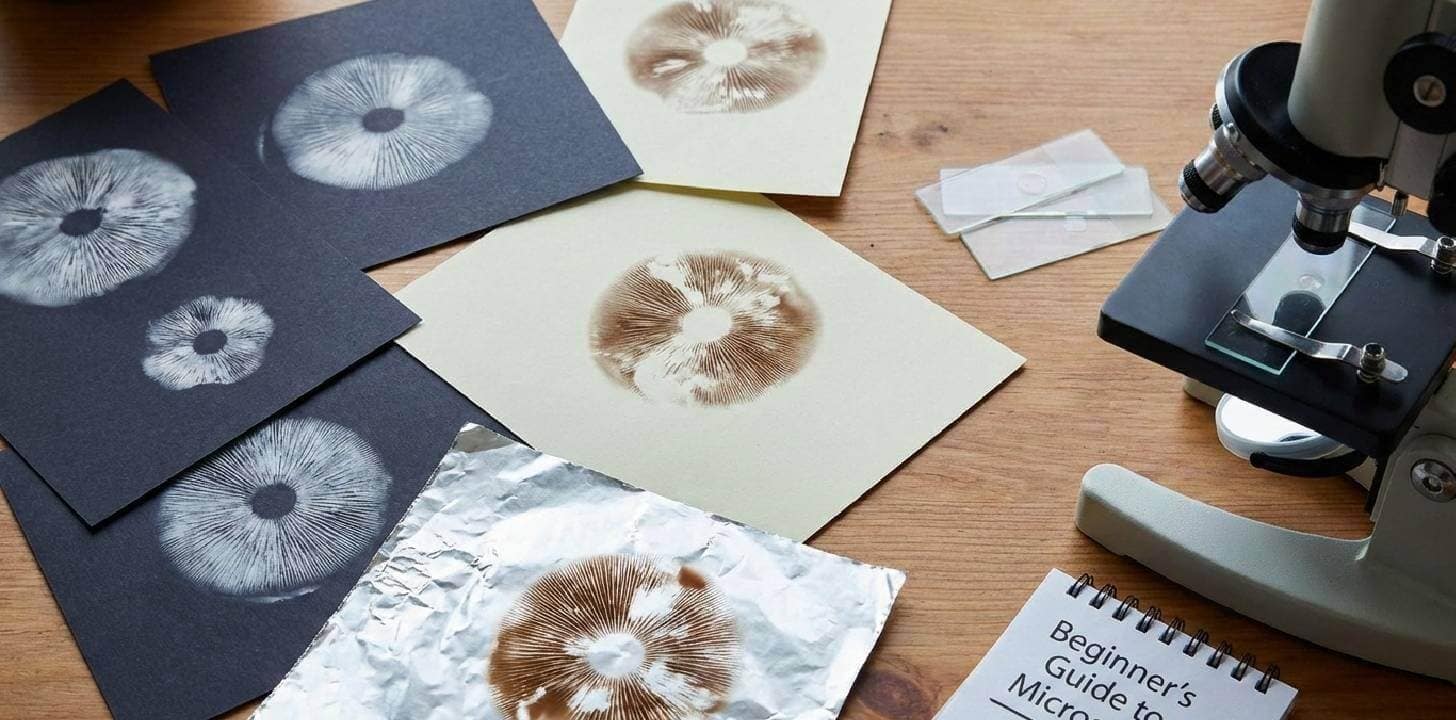
If you’re new to studying spore prints under the microscope, choosing the right strains can make your learning experience smoother, cleaner, and far more enjoyable. Not every print is equally simple to work with. Some are easier to prepare, some offer clearer structures to observe, and some are simply easier to find consistently. This beginner guide walks you through what makes a print truly beginner-friendly, shares trusted picks, and helps you build a smart starting collection of mushroom spores for microscopy.
What Makes a Print “Beginner-Friendly”
Availability
Beginners do best with strains that are widely available and consistently produced. Popular and reputable prints tend to come from stable genetics, standard coloration, and reliable spore deposition. This means beginners don’t have to stress about rare sourcing, inconsistent output, or unusual presentation.
Ease of Slide Prep
Beginner-friendly prints should be easy to lift spores from and transfer to slides without frustration. Consistent density, clear placement, and manageable spore spread go a long way. When prints are balanced instead of patchy or extremely thick, beginners can prep slides faster and focus more on observation than troubleshooting.
Documentation Clarity
Some species have cleaner, easier-to-read microscopic characteristics. For a new researcher, it helps when spore shape, size, and structural features are visible without needing years of experience to interpret. Beginner-friendly prints allow clear documentation right from your earliest microscopy sessions.

Beginner Pick List
Below are dependable beginner selections, grouped to help you understand how they fit into the broader microscopy world.
Cubensis Prints
- GT Mushroom Spore Prints: Often referred to simply as “GT,” this is one of the most recognizable and accessible Cubensis prints for microscopy. It’s widely available, meaning beginners rarely struggle to find authentic sources. GT prints typically have strong, clear spore deposition, helping new microscopists easily prepare slides and observe structural details. They’re a great introduction to Cubensis characteristics and remain useful even as your skills improve.
- Leucistic Treasure Coast Mushroom Spore Prints: Leucistic Treasure Coast offers something visually distinctive for beginners who want to expand beyond standard Cubensis without leaving the beginner-friendly category. These prints tend to deliver good clarity for observation, allowing you to compare morphology while still staying within a manageable learning curve. For beginners building their early collection, this is an excellent “second step” print after GT.
Non-Cubensis Prints (General Categories)
- Panaeolus Cinctulus Mushroom Spore Prints: For beginners ready to branch beyond Cubensis, Panaeolus Cinctulus is often recommended thanks to its consistent availability and interesting microscopy profile. These prints provide a great opportunity to compare spore characteristics against Cubensis, helping new researchers learn variation, shape differences, and identification details without choosing something overly rare or difficult.
- Cyanescen Mushroom Spore Print: For learners who want something more advanced but still manageable, Cyanescen prints offer a rewarding challenge. They’re known for visually interesting characteristics while still remaining accessible enough for motivated beginners. While slightly less “entry-level” than GT, they help bridge the gap toward deeper taxonomy study and long-term microscopy projects.
Cyanescen Mushroom Spore Print
$26.99
$37.48
Cyanescen Spore Print The Psilocybe cyanescens Wavy Cap Mushroom Spore Print from Magic Spore Labs offers researchers basidiospores from one of mycology's most historically anchored and morphologically distinctive Psilocybe species — a temperate woodland native whose formal scientific description dates… read more

How to Document Spore Prints
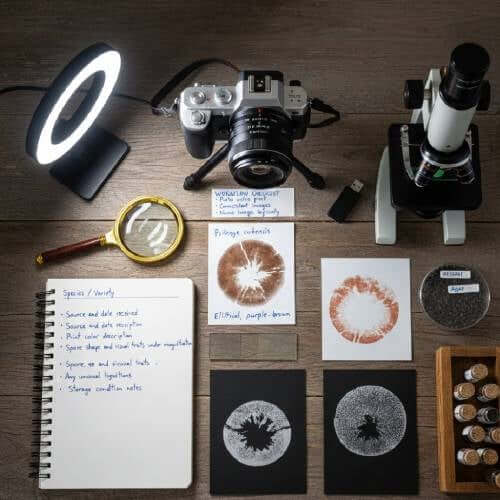
Once you have beginner-friendly spore prints, the next step is documentation. A simple, repeatable workflow makes your microscopy more meaningful and helps you build useful long-term records.
Photo Checklist
- Take a photo of the entire spore print before disturbing it.
- Photograph sections of the print to capture density patterns and color.
- Capture microscope images at multiple magnification levels.
- Ensure consistent lighting so colors and textures remain accurate.
- Name the images logically (species, date, magnification level).
Note Template
Use a simple structure like this for every print:
- Species / Variety
- Source and date received
- Print color description
- Spore shape and visual traits under magnification
- Any unusual observations
- Storage condition notes
This process not only improves accuracy, it also turns each print into a learning record rather than a one-time experiment.
Best Bundles to Start With
Instead of choosing only one or two prints, many beginners do better starting with a curated mix. A bundle allows you to compare multiple species, recognize patterns faster, and understand differences more clearly.
Print Pick 5 Bundle
A customizable 5-print bundle is often the smartest starting point. Beginners can select prints such as GT Mushroom Spore Prints, Leucistic Treasure Coast Mushroom Spore Prints, Panaeolus Cinctulus Mushroom Spore Prints, Cyanescen Mushroom Spore Print, and another Cubensis or non-Cubensis option. With five prints, you can conduct multiple microscope sessions, learn comparison techniques, and begin forming your own observation style.
Conclusion
The best beginner-friendly spore prints are those that balance availability, clarity, and ease of use. GT Mushroom Spore Prints offer a perfect entry point, while Leucistic Treasure Coast, Panaeolus Cinctulus, and Cyanescen prints help expand learning as your confidence grows. With a thoughtful selection, clear documentation workflow, and possibly a Print Pick 5 bundle to jumpstart your microscopy journey, beginners can build both skill and an impressive early collection of mushroom spores for research and observation.
FAQs
Are beginner prints different from advanced prints?
Not in terms of legitimacy or purpose. Beginner prints are simply easier to work with, easier to find, and easier to understand under a microscope.
How many prints should a beginner start with?
Three to five prints is ideal. This gives enough variety for comparison without becoming overwhelming.
Do spore prints expire?
Spore prints can remain useful for long periods when stored properly in cool, dark, and dry conditions. Good storage supports better long-term microscopy potential.
Why start with Cubensis before other species?
Cubensis prints are widely available, straightforward to observe, and well-documented, making them ideal for learning fundamentals before moving into more specialized varieties.