

Table of Contents
White Rabbit Spores are frequently discussed within microscopy and spore research circles due to their distinct visual characteristics and consistent sample behavior under magnification. Rather than being defined by hype-focused descriptions, this strain is best understood through careful observation, documentation, and comparison. This guide is designed for microscopy enthusiasts who want a clear, research-oriented overview that prioritizes what can actually be seen and recorded on a slide.
Whether you are cataloging mushroom spores for a personal reference library or comparing multiple Cubensis varieties side by side, White Rabbit Spores offer a useful case study for learning how subtle traits present themselves under the microscope.
What It Is + Why It’s Talked About
White Rabbit is generally described as a hybrid Cubensis lineage, often mentioned alongside other well-known strains due to its visual consistency and relatively predictable spore presentation. Much of the discussion around White Rabbit Spores comes from microscopy hobbyists who value clean, well-defined samples that are easy to examine at multiple magnification levels.
Unlike strains that are primarily known for extreme visual variance, White Rabbit Spores tend to generate interest because of their balance. Researchers often point out that slides prepared from this strain show fewer irregularities when proper handling and storage methods are used.
Some reasons White Rabbit Spores are frequently talked about include:
- Clear spore wall definition under standard brightfield microscopy
- Consistent coloration across multiple samples
- Low incidence of malformed spores when sourced responsibly
- Ease of comparison with other Cubensis varieties
These characteristics make White Rabbit Spores a practical reference strain, especially for those refining slide preparation techniques or building baseline observation skills.
What to Record Under the Microscope
When observing White Rabbit Spores, structured documentation is key. Recording consistent data points allows for meaningful comparison across sessions and between strains. While individual samples may vary slightly, there are several core traits that microscopy researchers typically note.
Spore Shape:
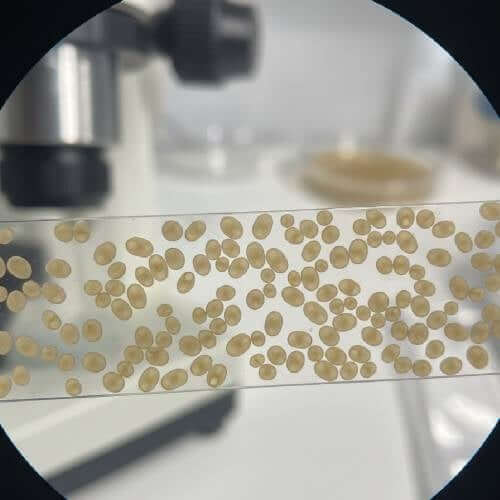
Most observations describe White Rabbit Spores as exhibiting the classic Cubensis elliptical to sub-elliptical form. Under higher magnification, edges are often smooth and well-defined, making shape classification straightforward.
Spore Size Range:
Accurate measurement is important. Using a calibrated eyepiece reticle, researchers often document length and width ranges across multiple spores on the same slide to identify consistency or variation.
Coloration and Opacity:
White Rabbit Spores commonly appear medium brown to dark brown, with relatively even pigmentation. Recording any translucency or uneven coloration can help identify preparation issues versus natural variance.
Wall Thickness:
Spore wall visibility is another key feature. Many microscopy notes reference clearly visible walls that respond well to both brightfield and phase contrast techniques.
Germ Pore Visibility:
Depending on magnification and lighting, the germ pore may be faintly visible. Noting whether it appears distinct or subtle can help standardize observations over time.
Keeping a consistent log with these criteria ensures that observations remain useful long after the initial examination.
White Rabbit Mushroom Spore Syringe
$24.99
White Rabbit Liquid Spores White Rabbit Liquid Spores stand out as a rare and compelling choice for researchers delving into the unique attributes of Psilocybe cubensis strains. Renowned for its strikingly white fruiting bodies and high psilocybin levels, White Rabbit… read more

Best Practices for Repeatable Observations
Repeatability is what separates casual viewing from disciplined microscopy work. White Rabbit Spores respond well to careful technique, making them suitable for refining repeatable observation methods.
Slide Preparation Consistency:
Using the same slide type, cover slip thickness, and mounting medium across sessions reduces variables that can affect visual results.
Controlled Lighting:
Minor changes in condenser height or light intensity can alter perceived spore color and contrast. Documenting microscope settings alongside observations improves accuracy.
Magnification Standards:
Many researchers choose to document spores at 400x and 1000x magnification. Sticking to the same magnification points allows for cleaner comparisons.
Environmental Control:
Temperature and humidity can influence condensation and slide clarity. Preparing slides in a stable environment helps maintain image quality.
Repeat Sampling:
Observing multiple spores from different areas of the slide helps confirm that recorded traits are representative rather than outliers.
- Prepare slides using identical materials
- Log microscope settings for every session
- Observe multiple fields of view per slide
- Store prepared slides consistently
Following these practices allows White Rabbit Spores to serve as a dependable reference point across multiple observation sessions.
Suggested Pairings for Comparison (Bundle)
Comparative microscopy is one of the most effective ways to sharpen observational skills. White Rabbit Spores pair well with other Cubensis varieties that highlight subtle differences in size, coloration, or structure.
Researchers often choose comparison strains that contrast with White Rabbit’s balanced profile. Pairing samples side by side can make it easier to identify unique traits that might otherwise go unnoticed.
Common comparison goals include:
- Identifying size variation across strains
- Comparing spore wall thickness
- Noting differences in pigmentation
- Evaluating germ pore visibility
When bundled with other well-documented strains, White Rabbit function as a stable midpoint reference, helping highlight both extremes and subtleties within Cubensis microscopy.
Conclusion
White Rabbit Spores occupy a practical space within microscopy-focused research. Rather than standing out through extremes, they offer consistency, clarity, and reliability—qualities that are especially valuable for structured observation and comparison.
By focusing on careful slide preparation, repeatable techniques, and detailed documentation, researchers can use White Rabbit as a dependable reference point within a broader microscopy collection. Whether examined on their own or alongside other strains, they reward disciplined observation with clear, interpretable results.
For anyone building a microscopy-first workflow, White Rabbit remain a solid choice for developing skills, refining technique, and maintaining a clean, well-documented research library.
FAQs
Are White Rabbit Spores suitable for beginner microscopy?
Yes. Their consistent presentation and clear structural features make them approachable for those learning spore identification and documentation.
Do White Rabbit Spores look different under different microscopes?
Variations can occur depending on optics, lighting, and magnification, which is why standardized settings are recommended for reliable comparison.
How many spores should be observed per slide?
Most researchers examine multiple fields of view, aiming to observe at least 20–30 spores to identify consistent traits.
Why is documentation emphasized so heavily?
Detailed notes allow observations to remain useful over time and enable meaningful comparisons between sessions and strains.
Can White Rabbit Spores be used as a reference strain?
Many microscopy hobbyists use them as a baseline due to their predictable visual characteristics.