
Table of Contents
Functional mushroom spores have quietly become a major point of interest for researchers, educators, and microscopy enthusiasts alike. While mushrooms are often discussed in culinary or supplement contexts, spores represent a different side of the conversation—one rooted in observation, classification, and biological study. In this guide, we’re breaking down what functional mushroom spores are, how they differ from other categories, and why they’ve earned a dedicated place in labs and learning environments.
What “Functional” Means
The word “functional” can be confusing, especially since it’s used differently across industries. In the context of mushroom spores, “functional” refers to species that are widely studied for their biological structure, taxonomy, and ecological role—and that are not part of the psilocybe category.
Psilocybe species are typically discussed in legal and regulatory frameworks due to their psychoactive associations. Functional mushroom species, on the other hand, exist in a separate category entirely. They are commonly referenced in academic literature, culinary history, and traditional research environments.
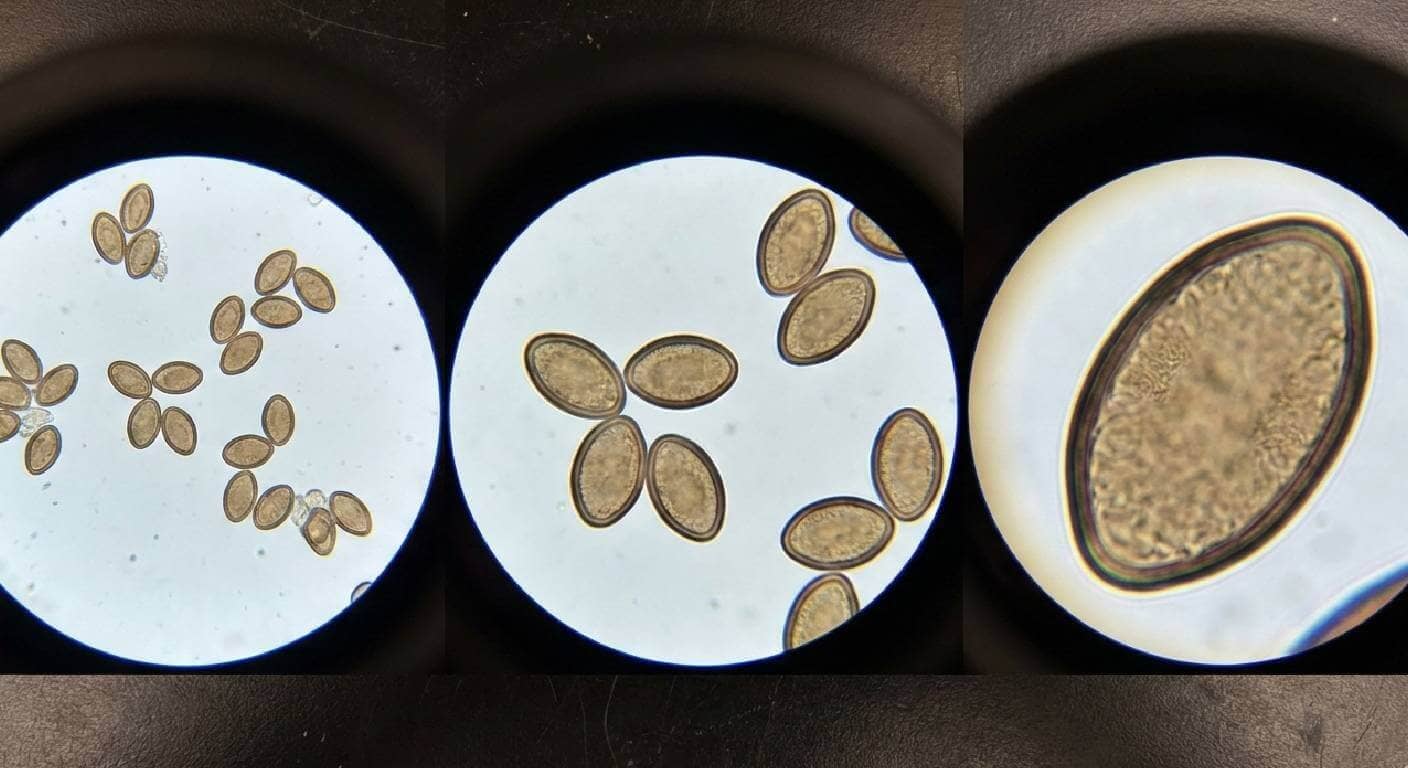
From a microscopy standpoint, this distinction matters. Functional species tend to be more widely accepted for classroom demonstrations, hobbyist microscopes, and general biological study. Their spores are often easier to contextualize when learning about spore size, wall thickness, coloration, and shape.
In simple terms, “functional” here doesn’t describe an effect it describes a category. It signals that the species belongs to a group of mushrooms frequently examined for structure and classification, rather than regulated psychoactive traits.
Functional Spore Types You Sell
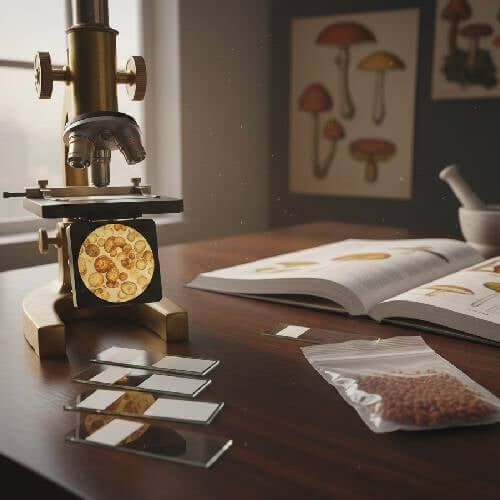
Each functional mushroom species has its own spore characteristics, making them interesting to compare side by side. Below is a closer look at the most commonly studied functional spore types.
Lion’s Mane
Lion’s Mane spores are often described as smooth, elongated, and relatively light in appearance under magnification. Researchers frequently note their uniformity, which makes them a popular choice for beginners learning how to measure and record spore dimensions.
Because Lion’s Mane mushrooms have a distinct physical form at maturity, their spores provide a useful contrast between macro and micro characteristics. Many microscopy enthusiasts enjoy documenting how these spores differ from more common gilled mushroom species.
Reishi
Reishi spores are among the most visually distinctive functional spores. They are often darker, with a thicker outer wall that stands out under higher magnification. This makes them a favorite for researchers focusing on spore wall structure and texture.
In microscopy notes, Reishi spores are frequently used as examples when discussing pigmentation and durability. Their visual weight and contrast can make them easier to identify in mixed samples.
Shiitake
Shiitake spores are widely studied due to the species’ long history of documentation. Under a microscope, these spores tend to appear elliptical and relatively consistent in size, which is helpful when practicing spore measurement techniques.
Because Shiitake mushrooms are so well known, their spores often serve as a reference point in comparative studies. Researchers may use them as a baseline when examining lesser-known species.
Shiitake Mushroom Spores
$9.99
$19.99
Shiitake Mushroom Spores Shiitake Mushroom Spores Review Unlock the potential of your microscopy exploration with our Shiitake Mushroom Spores in a ready-to-use liquid culture form. This 10mL syringe, filled with a high-potency strain, is sterilized and sealed to ensure maximum… read more

Turkey Tail
Turkey Tail spores are typically small and subtle, requiring careful focus and lighting to observe clearly. This makes them particularly useful for developing microscopy skills such as contrast adjustment and depth control.
Despite their size, Turkey Tail spores offer plenty of detail for those willing to take their time. Many researchers enjoy recording subtle variations in shape across different samples.
Cordyceps
Cordyceps spores are unique due to the broader diversity within the genus. Depending on the specific species, spores may vary noticeably in length and curvature. This variability makes Cordyceps a fascinating subject for comparative documentation.
For microscopy-focused users, Cordyceps spores often encourage deeper note-taking and repeated observation sessions to capture their defining traits accurately.
Why Researchers Study Functional Species
Functional mushroom species have been studied for decades across multiple disciplines. From biology classrooms to independent research setups, these spores offer a practical way to explore fungal reproduction and classification.
One major reason researchers focus on functional species is accessibility. These mushrooms are commonly referenced in textbooks and databases, making it easier to cross-check observations with existing literature. This creates a smoother learning curve for students and hobbyists alike.
Another reason is diversity. Functional mushroom spores span a wide range of shapes, colors, and surface textures. Studying multiple species side by side helps reinforce core microscopy concepts, such as distinguishing between smooth and ornamented spores or identifying subtle differences in size.
Finally, functional species are often used to build foundational skills. Before moving on to more complex or restricted categories, many researchers prefer to hone their techniques using spores that are well documented and widely accepted in educational settings.
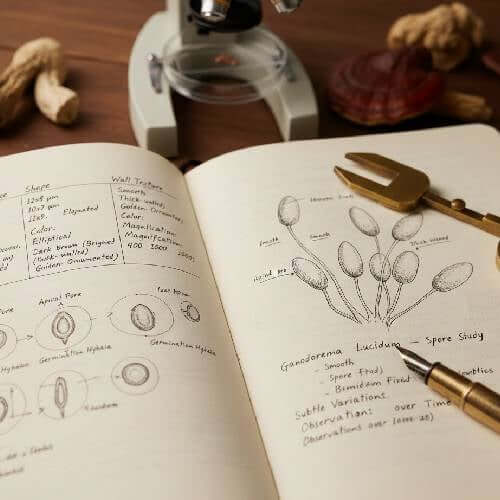
Microscopy Notes: What’s Common to Record
Keeping detailed microscopy notes is a key part of working with functional mushroom spores. While each researcher may have their own style, there are several common data points that tend to appear in well-organized records.
- Spore size: Length and width measurements, often recorded in micrometers.
- Shape: Descriptions such as elliptical, oval, or elongated.
- Color: Observations under different lighting conditions.
- Wall texture: Smooth, thick-walled, or slightly ornamented.
- Magnification level: The objective used when observations were made.
Many microscopy enthusiasts also include sketches or annotated images in their personal logs, even when working with the same species multiple times. Over time, these records can reveal subtle variations that aren’t obvious in a single session.
Consistency is key. Recording the same data points across different functional mushroom spores makes comparisons easier and helps build confidence in identification skills.
How to Choose a Functional Pick 5 Bundle
Selecting a Functional Pick 5 Bundle is often about balance rather than specialization. For those just getting started, choosing spores with clear visual differences can make the learning process more engaging.
A well-rounded bundle typically includes a mix of lighter and darker spores, as well as species with varying shapes and sizes. This variety helps users practice adjusting microscope settings and recognizing distinguishing features.
It’s also helpful to think about your goals. If you’re focused on improving measurement accuracy, species with consistent spore sizes like Shiitake or Lion’s Mane can be a solid choice. If you’re more interested in visual contrast and texture, Reishi or Cordyceps may stand out.
Ultimately, a Pick 5 bundle works best when it encourages repeated observation. Choosing species that you’re genuinely curious about makes it more likely you’ll spend time refining your notes and techniques.
Conclusion
Functional mushroom spores occupy an important space in microscopy and research-focused study. They offer a practical, accessible way to explore fungal biology without crossing into more regulated categories. From Lion’s Mane to Cordyceps, each species brings its own set of characteristics that reward careful observation.
Whether you’re documenting spore morphology for the first time or expanding an existing collection, functional mushroom spores provide endless opportunities to sharpen skills, compare species, and deepen your understanding of the fungal world.
FAQs
What are functional mushroom spores used for?
They are commonly used for microscopy research, educational demonstrations, and species identification studies.
Are functional mushroom spores the same as psilocybe spores?
No. Functional mushroom spores come from non-psilocybe species and are studied for biological structure rather than psychoactive associations.
Do different functional species look very different under a microscope?
Yes. Spore size, color, and shape can vary significantly between species, which is part of what makes them interesting to study.